Many people use "button tufting" and "diamond tufting" interchangeably, but they're not the same thing. Understanding the difference matters if you want your furniture to look right and hold up over years of use.
This guide breaks down what tufting actually is, the main types you'll encounter, and how to pick the right one for your space or project.
TL;DR
- Tufting pulls fabric through padding at set points, creating texture and a more secure surface
- Button tufting is the anchoring method; diamond tufting is a pattern built from it
- Main types—button, diamond, biscuit, and blind—fit different looks and use cases
- The right choice depends on interior style, traffic level, fabric, and maintenance capacity
- Commercial projects benefit from an upholstery partner who balances design and durability
What Is Diamond and Button Tufting?
At its simplest, tufting means anchoring fabric to padding at regular intervals so it can't shift or bunch up. The anchor points create small, controlled indentations across the surface, and the material between them puffs slightly, giving upholstery that signature dimpled texture.
Those anchor points can be made with buttons, folded and sewn seams, or knotted cord pulled through from the back.
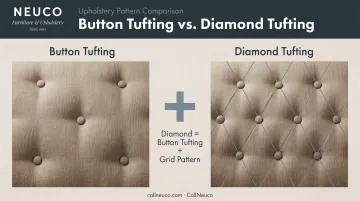
Button tufting refers specifically to the anchoring method: buttons (usually fabric-covered) secure each pull point.
Diamond tufting is a pattern, not a separate technique. It's what happens when those button tufts are arranged in a repeating, staggered diamond grid across the surface. Every diamond-tufted piece uses button tufting, but not every button-tufted piece uses a diamond layout. Some use straight rows, single columns, or clusters instead.
Why Tufting Matters in Upholstery Design
Tufting wasn't invented for looks. Victorian-era upholsterers developed the technique in the 1800s to keep loose padding from shifting and sagging inside seat cushions, according to Beautiful Homes by Asian Paints. Reinforcing the fill every few inches meant the cushion held its shape instead of collapsing into one lumpy mass over time.
The design payoff came later. Tufting adds:
- Genuine dimension and shadow, not just printed texture
- A tactile, handcrafted quality that flat upholstery can't replicate
- A structured surface that reads as more substantial and higher-end
There's no independent lab study measuring exactly how many extra years tufting adds to a sofa's life. What furniture manufacturers consistently note is that dividing the fill into smaller, secured sections reduces its ability to stretch and slump out of shape during regular use, per KOVI Fabrics.
Skip proper technique, though, and you get the opposite effect: shifting fill, uneven sagging, and tufts that look crooked within a few months.
For businesses managing furniture that's already tufted, a worn piece rarely needs to be scrapped. Re-covering or restructuring the existing tufting can restore both the look and the structural feel. Neuco handles this regularly for offices, hotels, and other commercial spaces that want to refresh furniture without buying new.
Types of Tufting
Tufting is a family of methods distinguished by how the fabric is anchored and how the tufts are arranged. Richardson Seating traces most modern variations back to the same 19th-century roots, but each has evolved to suit different furniture and traffic demands.
Button Tufting
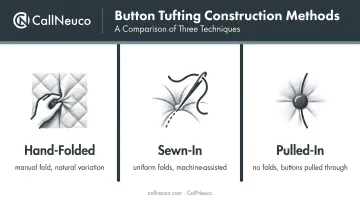
Button tufting uses fabric-covered buttons sewn or pulled through the padding at set points to hold the fabric in place. There are a few construction methods:
- Hand-folded: fabric is manually folded around each tuft before securing, creating natural variation
- Sewn-in: more uniform folds with less bulk, machine-assisted where possible
- Pulled-in: buttons pulled through with no folds or connecting seams
What sets button tufting apart is the visible button itself: the defining anchor point, unlike stitch- or knot-based methods.
Best suited for: classic and formal interiors, Chesterfield sofas, headboards, ottomans, and traditional hospitality seating.
Key strengths: crisp, well-defined indentations and an unmistakably traditional, crafted look.
Limitations: buttons can work loose under heavy or repeated use, and true hand-folded work carries higher labor costs than machine-assisted alternatives.
Diamond Tufting
Diamond tufting takes button tufting and arranges it into a repeating, staggered geometric grid. It's a subtype, not a separate anchoring method. The buttons (or pulled points) still do the same job, placed with precision to form diamonds across the entire surface.
Best suited for: statement pieces, Victorian and Hollywood Regency interiors, headboards, and upscale hospitality banquettes.
Key strengths: strong visual impact and a timeless silhouette that works well with solid or low-contrast fabrics.
Limitations: the pattern demands precise measuring and skilled labor to stay even, and it visually clashes with bold prints or stripes, where the pattern fights the fabric instead of complementing it.
Biscuit and Blind Tufting
These two methods prioritize a cleaner surface over decorative buttons.
- Biscuit tufting stitches fabric into a grid of soft, pillowed squares — sometimes with buttons, sometimes without
- Blind tufting creates indentations through rear stitching or hidden knots, leaving no visible hardware on the front at all
Best suited for: contemporary and minimalist interiors, plus high-traffic commercial seating where cleaning matters more than ornamentation.
Key strengths: simpler to wipe down, generally more durable under heavy use, and a softer, understated texture.
Limitations: less dramatic visually. "True" blind tufting (pulled with twine and no seams) can fail under sustained tension on fabrics that don't hold up to repeated pulling, which is why some upholsterers avoid it on hospitality furniture altogether.
How to Choose the Right Tufting Style
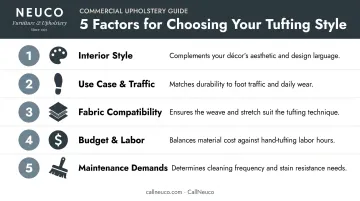
The right tufting style depends on how the piece will actually be used, not on the latest trend. A few factors carry the most weight:
- Interior style: classic and formal spaces lean toward button or diamond tufting; contemporary and minimal spaces lean toward biscuit or blind
- Use case and traffic: seat surfaces take far more wear than backs or headboards, so durability matters more where people actually sit
- Fabric compatibility: velvet folds cleanly into tufts; leather and vinyl hold shape but need more skill; linen and cotton tuft well but wrinkle differently over time
- Budget and labor: hand-folded button and diamond work costs more than pulled-in or machine-assisted methods, driven by fold formation and skilled labor (Corn Upholstery)
- Maintenance demands: commercial and hospitality settings with constant use need styles that don't trap dust or loosen easily
What to Watch Out for Before Finalizing
A few common mistakes show up again and again on commercial projects:
- Deep tufting on seat surfaces. Diamond or button tufts look sharp on a back or headboard but become a cleaning headache on a seat cushion people sit on daily.
- Ignoring fabric pattern. Bold prints and stripes almost always clash with tufted folds. The pattern breaks up unpredictably at each pull point.
- Underestimating upkeep. Loose buttons and dust buildup in folds require more regular attention than flat upholstery, especially in hospitality or healthcare settings.
For multi-piece or commercial projects, this is where a consultative partner earns its keep. Neuco works directly with designers and architects to match tufting style, fabric, and color to a space's functional and aesthetic requirements — rather than leaving it to guesswork after the furniture's already ordered.
Conclusion
Tufting has stuck around for over 150 years because it solves a real problem, not just because it looks good. Button, diamond, biscuit, and blind tufting each serve distinct purposes — some prioritize visual drama, others favor durability and easy upkeep.
Match the technique to the project. On larger or commercial pieces, get professional input early so style, fabric, and construction fit real wear. Neuco works with designers and businesses on custom upholstery to make that match hold up in daily use.
Frequently Asked Questions
What are the different types of tufting?
The main types are button, diamond, biscuit, blind, and channel tufting. Each creates a distinct visual and textural effect, but all serve the same core function: securing fabric to padding at set points.
Is tufted furniture still in style?
Yes. Tufting shows up in both classic and contemporary interiors today, with channel and blind tufting keeping the look relevant in modern spaces alongside revived Chesterfield styles.
What is the difference between button tufting and diamond tufting?
Button tufting is the anchoring method that uses buttons to secure fabric pulls. Diamond tufting is a specific pattern created by arranging those button tufts into a repeating diamond grid.
Does tufted furniture cost more to reupholster?
Generally, yes. Tufted pieces need more labor, more fabric for the folds, and greater precision than flat upholstery, which raises the overall reupholstery cost.
Can tufted furniture be repaired instead of replaced?
Usually. Loose buttons, minor sagging, and worn fabric on tufted pieces can typically be repaired by a skilled upholsterer, often avoiding the cost of full replacement.
What fabric works best for tufted upholstery?
Velvet is a popular choice for its drape and light-catching texture. Tightly woven cotton, linen, and leather also tuft cleanly and tend to hold up better in high-use settings.