Introduction
Walk into any lobby, restaurant, or waiting room and you'll notice the fabric first. The chair color, the pattern, maybe the texture. What most people never notice is the seam running around the cushion's edge, and that's the part doing the real work.
Cushion edge construction determines how long seating holds up under daily use, how easy it is to clean, and whether a furniture program looks cohesive across dozens of pieces. Get it wrong, and you're looking at frayed seams, mismatched replacements, and higher long-term costs.
Box edge and welted cushions are the two most common construction styles in commercial upholstery, each built for different traffic levels, budgets, and aesthetics. This article breaks down what they are, how they compare to knife edge cushions, and how to pick the right one for your space.
Key Takeaways
- Box edge cushions keep a uniform depth and crisp seam line—ideal for high-use seats that need to hold their shape
- Welting reinforces seam edges with a corded trim and adds a polished, tailored accent
- Knife edge cushions skip the side panel for a flatter, casual profile best suited to pillows and backs
- Match the style to traffic, cleaning demands, budget, and whether you need a structured or soft look
What Are Box Edge and Welted Cushions?
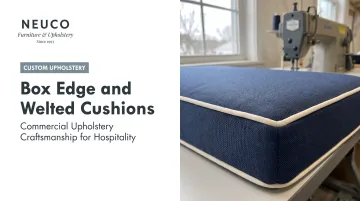
A box edge cushion has a boxing panel that wraps the entire perimeter, connecting the top and bottom fabric panels at a consistent height. This creates that squared-off, tailored shape you see on most quality seat cushions, along with a defined seam separating the top, bottom, and side sections.
Welting (also called piping or welt cord) is a fabric-wrapped cord stitched directly into a seam. It serves two purposes at once:
- Reinforces the seam against stress and pulling
- Adds a decorative edge line, often in a contrasting color
- Creates a clean, consistent perimeter that holds up under commercial use
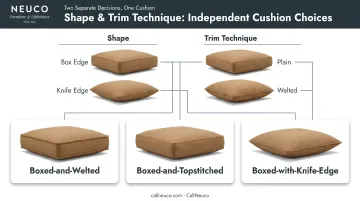
Here's where confusion creeps in: box edge describes a cushion's shape, while welted describes a trim technique. They aren't interchangeable terms, and they aren't mutually exclusive either. A box edge cushion can be welted or left plain.
Commercial upholsterers commonly offer boxed-and-welted, boxed-and-topstitched, and boxed-with-knife-edge as distinct construction options. That range tells you these are separate decisions, not one style with two names.
So What's the Edging Around a Cushion Actually Called?
That corded trim is welting, welt cord, or piping—three names for the same detail. Spec it as self-welt (matched to the cover) or contrasting welt when you order replacements so the edge finish stays consistent across a seating run.
Why Cushion Edge Style Matters for Commercial Furniture
Edge construction isn't a cosmetic afterthought. It directly affects three things that matter to any business buying seating: seam durability, cleaning ease, and visual consistency across a furniture program.
Seams are the weakest point in any upholstered piece, which is why the industry tests for it. The Association for Contract Textiles' seam slippage guideline for indoor woven upholstery (ASTM D4034) requires a minimum of 25 pounds of resistance in both warp and weft directions before yarns start shifting apart at the seam.
That threshold exists because seams under real-world stress (people sitting down, sliding across, leaning on armrests) fail faster than the fabric itself.
What typically goes wrong when the wrong edge style gets specified:
- Premature seam wear on high-traffic pieces built with plain seams that needed reinforcement
- Mismatched looks when replacement cushions don't match the original construction across a multi-room program
- Higher long-term costs from repeat reupholstery instead of getting it right the first time
This decision benefits from an outside set of eyes. Businesses going through new construction, a remodel, or a furniture refresh often don't know which construction fits their traffic pattern until something starts wearing out.
Working with a consultative upholsterer such as Neuco means matching cushion construction, fabric, and color to the space's actual use, not just its Pinterest board.
Types of Cushion Edge Styles
Cushion edge construction isn't one-size-fits-all. The right pick depends on the look you want, how much abuse the piece will take, and what you're willing to spend, both now and down the road. These three styles cover the vast majority of both residential and commercial seating.
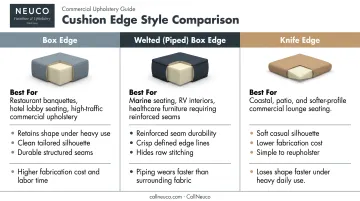
Box Edge (Plain) Cushions
A plain box edge cushion has the boxed perimeter panel but skips any cord trim. Flat seams, clean lines, nothing extra.
Best suited for:
- Modern or contemporary spaces with a minimalist design language
- Patterned fabrics, where welting would interrupt a print's continuity across the seam
Strengths:
- Sleeker, more streamlined appearance
- Fewer crevices for dirt and debris to collect
- Lets bold prints and patterns read cleanly across the whole cushion
Limitations: Without a welt cord reinforcing the seam, plain box edges can show wear faster in heavy-use settings, and the edge itself has less visual definition.
Welted (Piped) Box Edge Cushions
This is a box edge cushion with welting stitched along the top and bottom seams, often in a contrasting fabric for a tailored, finished look.
Best suited for:
- High-traffic commercial seating
- Hospitality lobbies, restaurant booths, and hotel lounges
- Spaces where durability and a polished finish both matter
Strengths:
- Welt cord reinforces seams against the wear that comes with constant use
- Contrast piping adds a design accent without changing the whole fabric
- Camouflages minor stitching imperfections along the seam line
Limitations: Welted construction costs more to manufacture, and the crevice created by the cord can trap dust and soil. That's a real concern in settings where cleanability is non-negotiable.
The Association for the Health Care Environment specifically advises avoiding piping and other seam-heavy details in patient-care furniture, noting that joints and seams complicate cleaning and can become reservoirs for contaminants. That doesn't rule out welting everywhere, but it does mean healthcare and food-service settings deserve extra thought before defaulting to a corded seam.
Knife Edge Cushions
A knife edge cushion has no boxing panel at all. The front and back fabric panels are sewn directly together and taper to a point at the edge, giving it a flatter, softer, more casual profile.
Best suited for:
- Toss pillows and sofa back cushions
- Relaxed seating areas where structure isn't the priority
Strengths:
- Simpler and cheaper to produce
- Soft, relaxed drape that box edge construction can't replicate
Limitations: Knife edge cushions lack the structured support needed for seat cushions that take daily weight. Manufacturers commonly reserve knife edge for pillows and decorative back cushions rather than primary seating surfaces, which tells you where the industry has already drawn the line.
How to Choose the Right Cushion Edge Style
The right construction depends on how the furniture actually gets used, not what's trending. A few factors should drive the decision every time.
- Purpose and location. A private office chair and a healthcare waiting room bench face completely different demands, even if they look similar on a spec sheet.
- Expected traffic. Higher traffic generally justifies the reinforcement welting provides. The same durability logic that puts low-traffic private spaces at roughly 15,000 double rubs versus 30,000+ for high-traffic public areas applies to seam and edge construction too.
- Cleaning and maintenance demands. Restaurants, healthcare facilities, and hospitality settings all have different soiling patterns and cleaning protocols. Crevice-heavy welting can complicate that routine.
- Budget. Weigh both the upfront fabrication cost and what you'll spend on reupholstery down the line.
- Aesthetic consistency. If you're outfitting an entire hotel lobby or restaurant, mismatched edge styles between old and new pieces stand out fast.
None of these factors work in isolation. A quick consultation with a fabricator familiar with commercial specs, rather than a guess based on a fabric swatch, tends to save money later.
What to Check Before Finalizing Your Cushion Style
Before signing off on a cushion order, run through a short gut-check.
- Don't over-specify decorative welting when durability and easy cleaning matter more. Contrast piping that collects grime in a restaurant booth within six months isn't worth the look.
- Weigh maintenance honestly. Welted seams look sharp, but high-soil or high-traffic spaces mean extra cleaning around that seam.
- Look past the upfront invoice. A cheaper box edge that needs reupholstering in two years can cost more than a longer-lasting welted build.
Welting isn't a bad choice—it just needs to match the environment, not only the mood board.
Conclusion
Box edge, welted, and knife edge cushions each solve a different problem. Box edge gives you clean, structured lines. Welting adds reinforcement and a tailored accent where seams take the most abuse. Knife edge keeps things soft and casual where structure isn't the point.
Match the construction to how the space actually gets used—traffic, cleaning routine, and overall design. That choice leads to seating that holds up and looks right for years, not months.
Those decisions benefit from a second set of experienced eyes. Neuco works with businesses and design teams on projects of any size, from a single cushion refresh to a full remodel, helping match construction, fabric, and color to the space before the first stitch goes in.
Frequently Asked Questions
What does box cushion mean?
A box cushion has a side panel wrapping its perimeter, creating consistent depth and a clear seam between the top, bottom, and sides. It's the standard construction for most structured seat cushions.
What is the edging around a cushion called?
The edging is called welting, welt cord, or piping. It's a fabric-wrapped cord stitched into the seam that reinforces it and adds a decorative detail line.
What is the difference between a box cushion and a knife edge cushion?
Box cushions have a boxed side panel that creates consistent depth, while knife edge cushions skip boxing entirely and taper directly to a point. The result is a flatter, more casual profile on knife edge styles.
Can welting be added to any cushion style?
Yes. Welting is a trim technique, not a fixed cushion shape, so it can be added to box edge, knife edge, and most other cushion constructions when you want extra seam strength or a finished detail line.
How often do commercial cushions need to be reupholstered?
It depends on traffic volume, fabric durability, and construction quality—there's no universal timeline. Neuco can assess your space and help set a realistic reupholstery schedule.
Is welted or box edge better for outdoor or patio furniture?
Plain box edge is often easier to clean and maintain outdoors since it has fewer crevices for dirt and moisture to collect. Welted styles add durability and visual definition but may need more frequent cleaning attention in exposed settings.