The back cushion is what separates "seating that works" from "seating people actually want to sit in." Sagging foam, worn fabric, or a missing cushion altogether doesn't just look bad — it hurts comfort, brand perception, and in commercial settings, how long guests stick around.
A 2019 study of 262 restaurant customers found that seating comfort directly improved customers' sense of mental comfort, which in turn shaped their overall experience of hospitality. Comfortable seating isn't a nice-to-have. It's part of the product.
This guide breaks down cushion types, sizing and thickness, fabric selection, DIY versus professional upholstery, and how to keep your cushions looking sharp for years — whether you're outfitting one home nook or a 40-foot restaurant wall.
Key Takeaways
- Custom back cushions deliver ergonomic support and often replace worn inserts without a full banquette swap
- Foam thickness and density are the two biggest drivers of comfort and back support
- Performance-grade fabric is non-negotiable for cushions facing daily commercial wear
- Multi-unit and hospitality jobs need a commercial cushion manufacturer for matched specs and lead times
- Scheduled cleaning and timely refoaming extend service life under heavy commercial use
What Are Banquette Back Cushions & Why They Matter
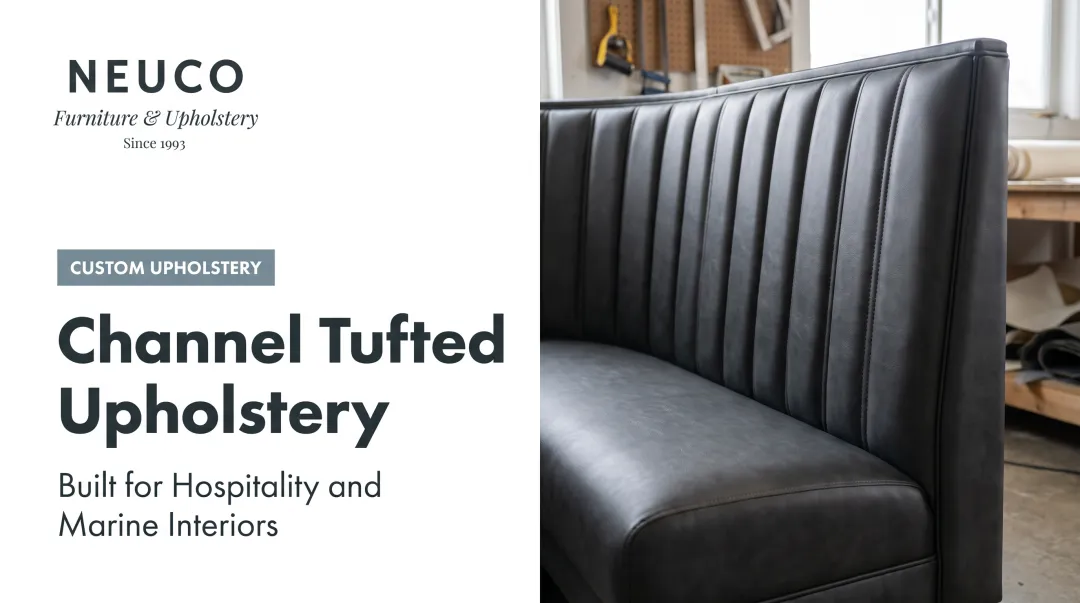
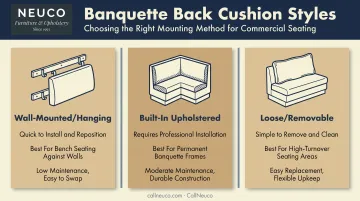
A banquette back cushion is a padded panel positioned behind a bench seat to provide lumbar and upper-back support. It can be wall-mounted, permanently built into the bench frame, or loose and removable. Its job is always the same: keep the guest's back supported and comfortable.
Back cushions also solve a problem that throw pillows never quite fix. Loose pillows slide, flatten, and end up on the floor by the second seating. A fixed or semi-fixed back cushion stays exactly where it's supposed to, which matters a lot in a busy dining room turning over tables every 45 minutes.
Types of Banquette Back Cushions
- Wall-mounted/hanging cushions — float above the bench seat on a mounting board or cleat; easy to install and swap during commercial refreshes
- Built-in upholstered backs — permanently attached to the bench frame for a seamless, custom-fit appearance
- Loose/removable cushions — easiest to clean or replace, making them ideal for high-turnover environments like restaurants and cafés
Why They Matter for Commercial and Design-Driven Spaces
Comfort shapes more than the immediate seating experience. In commercial dining and waiting areas, supported seating keeps guests settled longer and cuts the fidgeting and early exits that come with hard, upright benches.
Back cushions also work as a branding surface. Fabric color, pattern, and texture can echo a logo, mark a seasonal refresh, or tie the banquette into the broader interior identity.
Key Factors to Consider When Designing Banquette Back Cushions
Getting a banquette back cushion right comes down to a handful of specific decisions. Get these wrong and even beautiful fabric won't save the seat from feeling off.
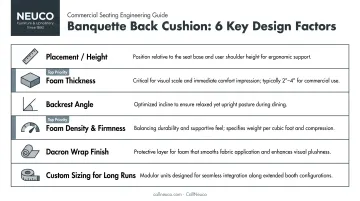
Placement and height. Commercial banquette guidance generally puts finished seat height at 18 to 19 inches from the floor to the top of the seat crown. Back cushions are typically hung 1 to 2 inches above the seat cushion: close enough to feel connected, high enough to avoid a cramped look.
Foam thickness. Most upholsterers work within a 2 to 4-inch range of high-density foam for back cushions:
- Too thin, and the cushion feels flat with no give
- Too thick, and it can feel bulky or unstable against the back
- Right thickness depends on the bench angle and how deep the seat is
Backrest angle. A slightly slanted backrest, rather than a straight vertical panel, improves lumbar contact and reduces pressure on the lower back over long sitting periods. A shaped, supportive lumbar contour often does more for posture than angle alone.
Foam density and firmness. These are two separate specs, not one. A cushion can be dense and soft, or lower-density and firm. For commercial use, medium-to-high density foam holds its shape far longer under daily traffic than the softer foam common in residential pieces.
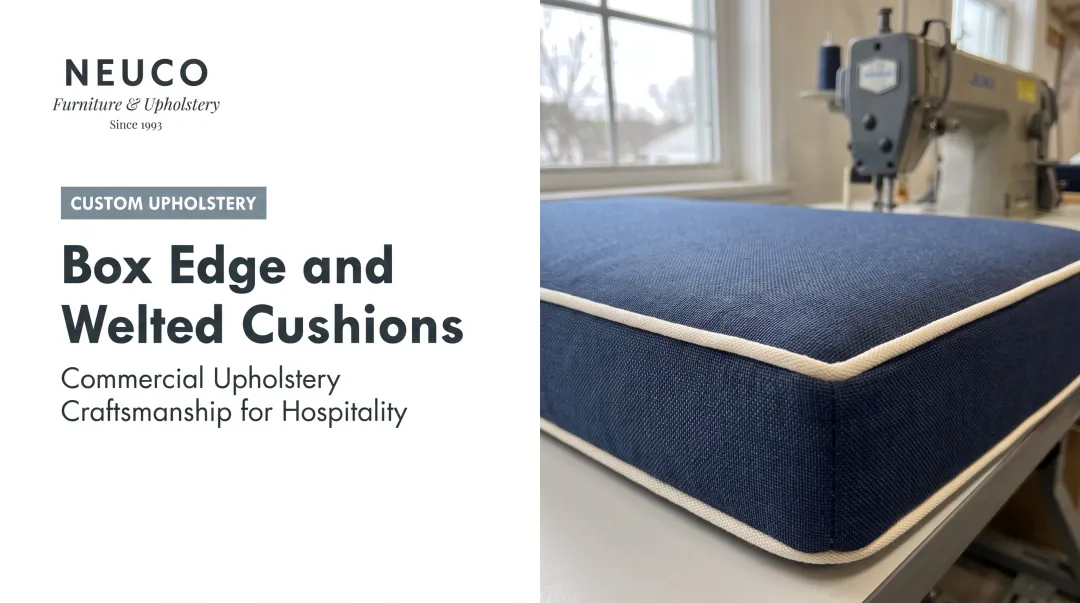
Dacron wrap for a finished edge. Wrapping foam in Dacron or batting before upholstering creates smooth, rounded "crowned" edges instead of hard, boxy corners. That small step noticeably changes how professional and comfortable a cushion feels.
Long wall runs need custom sizing. Standard pre-made cushions rarely fit variable-length commercial walls cleanly. Custom-fabricated continuous panels, sized to the actual run, are usually the better call for restaurants and hotels with irregular banquette layouts.
Fabric & Material Selection for Durability and Style
Decorative or drapery-weight fabric might look great in a showroom, but it won't survive months of elbows, bags, and spilled drinks. Banquette back cushions need true upholstery-grade fabric built to handle repeated contact.
Performance fabric is engineered to resist stains, moisture, and odor, which matters for anything that sees food, drinks, or heavy daily traffic. The Association for Contract Textiles' dining-area guideline recommends fabric rated for at least 30,000 double rubs for dining seating.
That figure is a durability threshold, not a lifespan promise. Abrasion counts qualify a fabric for the job; they don't predict exactly how many years it will last.
When you specify fabric, keep these practical points in mind:
- Mixed fabrics work: Seat and back cushions don't need to match. Use heavy-duty performance fabric on the seat and a different texture or color on the back for visual interest where wear is lighter.
- Nap and pattern repeat: On long commercial runs, mismatched grain or a pattern that jumps mid-panel reads clearly across a 20-foot wall.
- Custom color matching: A consultative partner helps lock fabric and color across the project. Neuco works with designers, architects, and owners to source and match lines such as Coral, Fabricut Contract, Stinson, Burch, and Douglass Fabrics for new builds, renovations, or a seasonal refresh.
DIY vs Professional Upholstery: When to Call in the Experts
A single banquette back can be a manageable DIY build if you only need one unit:
- Mount a board to the wall or bench frame at your desired height
- Wrap foam and batting around the board for a rounded profile
- Staple fabric tightly around the back, mitering corners for a clean finish
That approach can work for one cushion. It breaks down quickly on commercial jobs, where you typically need:
- Multiple units that match in thickness, seam placement, and finish
- Code-compliant, flame-retardant fabrics and foams
- Consistent quality across a full dining room, lobby, or facility
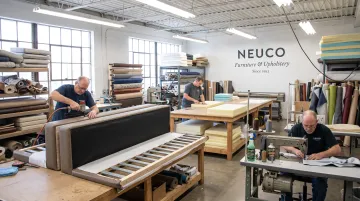
Those requirements are why most commercial projects go to a fabricator rather than an in-house build. Neuco manages the process from color and fabric consultation through ordering, delivery, and installation, on-site or in its Traverse City workroom.
The company has completed more than 1,000 upholstery and furniture projects over 30-plus years across restaurants, hotels, healthcare facilities, marine interiors, and RV/van conversions. That range matters: a diner booth cushion and a hotel lobby banquette panel have different durability and code needs, and a partner who has built both already knows the difference.
When frames are still sound, custom replacement cushions and new upholstery are often more cost-effective than buying whole new seating. You keep the layout you have and update comfort, fabric, and appearance to commercial spec.
Maintenance Tips to Extend the Life of Banquette Cushions
Cushions last longer with a little routine attention:
- Clean according to fabric type. Spot-clean performance fabric as spills happen. Vacuum seams and corners regularly—crumbs collect where cushions meet the bench frame.
- Check foam periodically. Press the cushion and watch for slow rebound or visible compression. Catch wear early so you can plan refoaming or replacement before guests notice.
- Rotate or flip loose cushions. When the design allows it, turn them on a set schedule so wear spreads evenly instead of breaking down in one spot.
Steady upkeep costs less than an unplanned full replacement mid-service.
Frequently Asked Questions
What is the best cushion for back pain?
Medium-to-firm, high-density foam paired with a shaped lumbar contour (often via a slightly angled backrest) generally offers the best support. Overly soft or thin cushions tend to worsen discomfort over long sitting periods.
How thick should a banquette cushion be?
Most banquette cushions use 2 to 4 inches of high-density foam. The right thickness depends on whether it's a seat or back cushion and how firm you want the final feel.
How do I make banquette seating more comfortable?
Three things matter most: an ergonomic bench and backrest angle, quality foam-and-batting cushioning, and a back cushion positioned at the right height relative to the seat. Get all three right and long sits stay comfortable instead of fatiguing.
Can banquette back cushions be recovered instead of replaced?
In most cases, yes. Existing foam and frames can often be reused with new covers or custom-made replacement cushions, which is usually more cost-effective than replacing the full banquette.
What is the standard height for a banquette back cushion?
Back cushions commonly run roughly 18 to 24 inches tall, mounted about 1 to 2 inches above the seat cushion. Exact placement varies based on the bench design and how the space is used.