Designers and facility managers often lump it in with diamond or button tufting, then struggle to find a shop that can actually execute the linear channels correctly at commercial scale. This guide breaks down what channel tufting is, how it stacks up against other tufting styles, which fabrics hold their shape, where it performs best in commercial spaces, and how to get the work done right.
Key Takeaways
- Channel tufting forms parallel padded tubes for a linear, tailored look—unlike diamond tufting’s cross-hatch pattern
- Best fit for sofas, banquettes, headboards, and reception seating in hospitality, healthcare, and office spaces
- Solid colors and textured weaves hold their shape in channels better than busy prints or stripes
- Even channel width and tension at commercial scale need a skilled upholsterer—not a DIY fix
What Is Channel Tufted Upholstery?
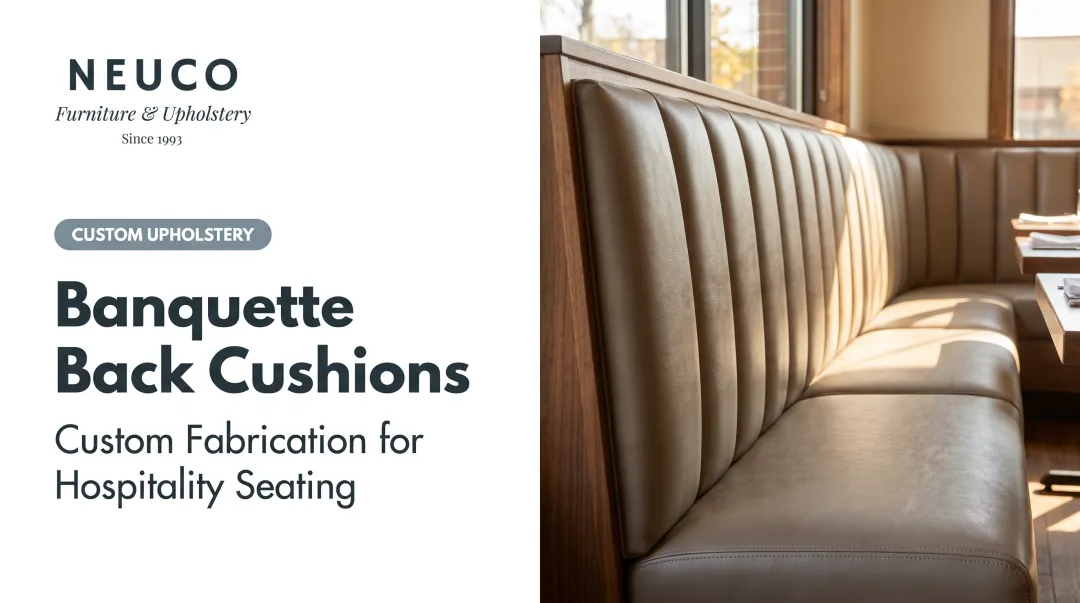
Channel tufting sews fabric and padding into a series of parallel pockets, or "channels," instead of pulling material into diamonds or squares. Each channel forms a raised, padded tube, and the technique can run vertically, horizontally, or even at an angle depending on the piece.
According to Corn Upholstery's furniture and upholstery glossary, channeling (also called fluting) pulls upholstery into evenly spaced padded sections separated by channels, and the width of those sections can vary to change the final look. Narrow, tapered channels feel understated. Wide, plump ones read as bold and sculptural.
The style carries an Art Deco pedigree, with design historians tying its look to 1920s Hollywood glamour, and it saw a documented revival in 1970s furniture design. That mix of Deco polish and 1970s revival is why it still shows up in mid-century-inspired lobbies, lounges, and hospitality seating.
Channel width shapes the final look:
- Shallow, flat channels create a subtle, tailored texture
- Deep, plump tubes add volume and can make a shorter chair back or headboard look taller
- Tapered channels (narrower at one end) can visually elongate a piece
Channeling started as a way to keep loose fill from shifting. Today it is primarily a decorative choice.
Common Upholstery Terms to Know
Two terms get mixed up constantly:
- Button: The fabric-covered fastener that anchors fabric into the padding—common in diamond or biscuit tufting
- Tuft: The puckered dimple left when a button or stitch pulls fabric into the padding
Channel Tufting vs. Other Tufting Styles
Not all tufting looks alike, and the differences matter when you're specifying furniture for a commercial project.
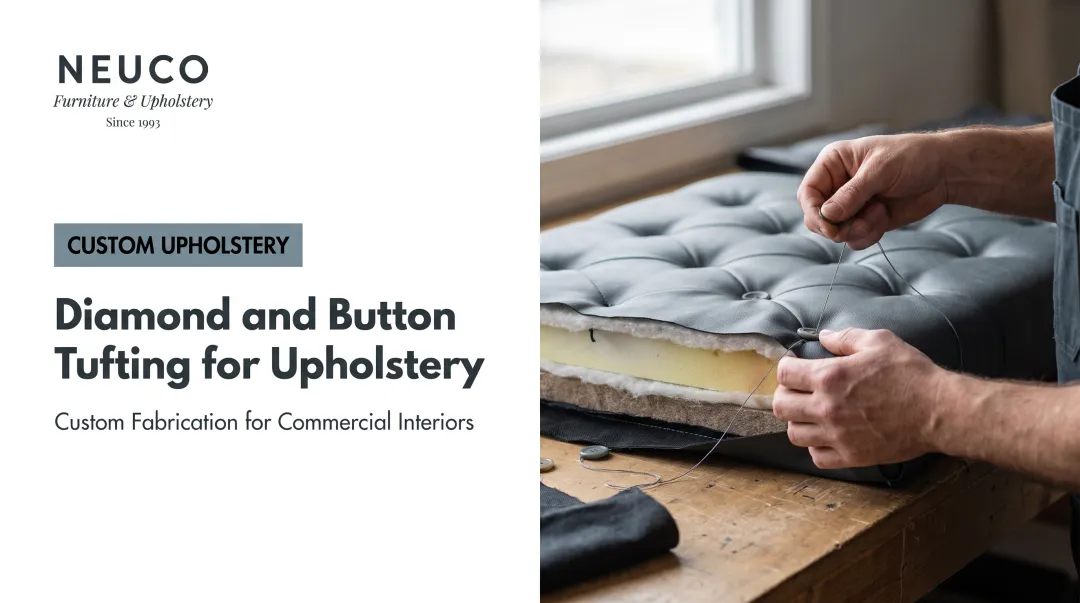
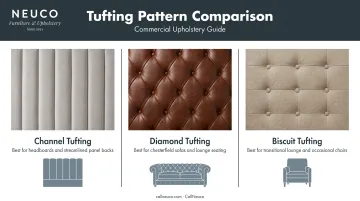
Channel tufting runs in straight, parallel lines. Diamond tufting pulls fabric into a repeating cross-hatch grid, usually with buttons at the intersections, as on classic Chesterfield sofas. Biscuit or button-back tufting uses a similar grid but forms shallower, squarer pockets with less depth than true diamond tufting.
Here's a quick side-by-side:
| Style | Visual Pattern | Best Use Cases | Maintenance Notes |
|---|---|---|---|
| Channel | Straight, parallel tubes | Headboards, banquettes, modern lounge seating | Fewer seam intersections; simpler surface geometry |
| Diamond | Cross-hatch grid with button points | Chesterfields, traditional lobby seating | More seams and button wells to clean around |
| Biscuit/Button-back | Shallow square grid | Transitional-style sofas and chairs | Less depth than diamond, moderate seam count |
On cleanability, channel tufting's simpler geometry means fewer seam intersections than diamond patterns. Healthcare projects still need a stricter standard.
AHE's cleanability guidelines for healthcare furniture recommend minimal texture, uninterrupted surfaces, and no crevices that trap contaminants, regardless of tufting style. In clinical settings, that guidance should outweigh aesthetic preference.
Outside clinical environments, tufted headboards—including channel styles—remain strong in hospitality and residential-style commercial interiors. Projects such as the InterContinental Buckhead Atlanta and Kimpton Hotel Theta in Manhattan use channel-tufted guestroom headboards, so the look still carries weight in boutique hotel design.
Choosing the Right Fabric for Channel Tufting
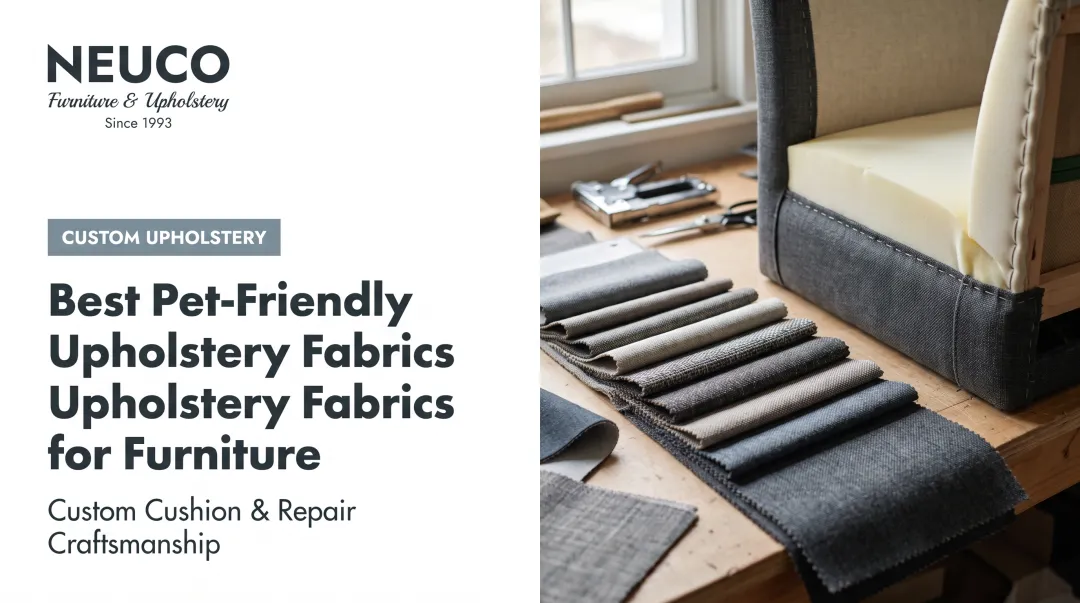
Fabric choice makes or breaks a channel tufted piece. Solid colors, textured weaves, and tone-on-tone patterns hold their shape and alignment across each channel far more predictably than bold prints or stripes, which can distort or misalign as the fabric wraps into each tube.
Fabrics that tend to perform well in commercial channel tufting:
- Commercial-grade velvet, for softness with a rich, dimensional look
- Faux leather, for wipeability in high-traffic areas
- Crypton-type performance textiles, built for stain and moisture resistance
- Tight, textured weaves that hide seams without competing with the channel lines
For headboards, velvet and performance weaves are the usual pick. They deliver a soft, hospitality-grade feel while standing up to nightly guest turnover and cleaning.
Fabric weight and stretch matter more than most specs suggest. Heavier fabrics with minimal stretch hold a crisp channel shape over years of use, while lighter or stretchier materials can loosen and sag at the seams.
On durability, the Association for Contract Textiles' abrasion guidelines set 30,000 Wyzenbeek double rubs or 40,000 Martindale cycles as the benchmark for high-traffic woven upholstery. Coated fabrics like faux leather rate even higher at 50,000 double rubs. Ask any fabric supplier for these numbers before specifying for a lobby or restaurant.
Pattern direction is another detail worth confirming upfront, especially with velvet's nap or any directional weave, since misaligned nap across channels is one of the most common install mistakes.
Where Channel Tufting Works Best in Commercial Spaces
Channel tufting earns its keep across a handful of commercial environments, each with different priorities.
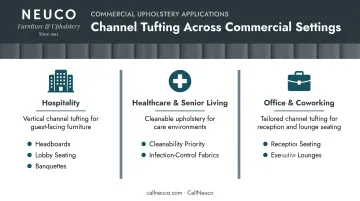
Hospitality is where the style shows up most often right now. Hotel headboards, lobby seating, and restaurant banquettes all benefit from the texture channel tufting adds without visually overwhelming a room. Recent hotel and restaurant projects upholstered in velvet and velour show designers still reaching for this look in 2024 and 2025 builds.
Healthcare and senior living settings call for a more careful approach. Waiting room sofas and lounge chairs need clean lines and fabrics that meet infection-control standards. Per AHE's guidance referenced above, impervious, disinfectant-compatible upholstery should come first, with channel tufting applied only where the seam geometry doesn't compromise cleanability.
Office and coworking spaces are catching on quickly. Reception seating and executive lounge furniture increasingly use channel-tufted banquettes to create an upscale, residential-inspired feel. Several recent corporate headquarters projects have leaned into this look for reception-adjacent lounge areas.
Can You Add Channel Tufting to Existing Furniture?
Short answer: not by upholstering directly over the existing fabric. Clean, evenly padded channels require stripping the piece down to its frame and rebuilding the padding and stitching from scratch. Layering new fabric over old padding won't create the crisp tube shape channel tufting depends on.
That said, reupholstering existing furniture into a channel tufted design is often far more cost-effective than buying new, especially for businesses managing dozens of identical chairs or a long banquette run. A hotel replacing 40 lobby chairs, for instance, can usually refresh the frames rather than sourcing new furniture entirely.
Reupholstery into channel tufting makes the most sense when you need to:
- Match a new fabric direction across pieces already in the building
- Refresh many identical chairs or a banquette run without full replacement
- Coordinate finishes with designers and architects on a remodel
Neuco does this work for commercial clients—custom channel tufting and fabric solutions on existing frames—so the finished pieces match the project vision without the cost of full replacement.
Working with a Professional for Commercial Channel Tufting Projects
Precision is non-negotiable once a project scales past one or two chairs. Matching channel width and tension across a dozen lounge chairs or a continuous banquette run demands trained hands, not a weekend upholstery attempt. Uneven tension shows immediately once pieces sit side by side.
A full-service partner typically manages the whole process:
- Consultation and space planning: reviewing the space or architectural drawings to plan furniture and layout
- Design collaboration: working directly with the client's designer or architect on the intended look
- Fabric and color selection: narrowing down commercial-grade materials suited to the application
- Purchasing and logistics: handling ordering, warehousing, and delivery
- Installation: completing work on-site or in-shop, depending on project scope
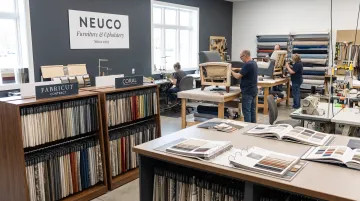
Neuco runs this exact model out of its Traverse City workroom, with both on-site and in-shop upholstery for commercial clients. The company has more than 30 years in business and over 1,000 completed projects across hospitality, healthcare, education, and corporate settings.
It sources commercial-grade fabric through partners like Fabricut Contract, Coral, Stinson, Burch, and Douglass Fabrics. Designers and architects can visit the showroom to review fabric options and finalize a plan before production starts.
Frequently Asked Questions
What's the best fabric to upholster a headboard with?
Durable, low-pattern fabrics like commercial-grade velvet or performance weaves work best. They hold channel shape well over time and resist the wear that comes with nightly guest use.
Are tufted headboards still in?
Yes. Tufted and channel tufted headboards remain popular in hospitality and boutique-style interiors, with several 2023-2024 hotel projects featuring the look prominently.
What do you call the buttons on upholstery?
They're simply called buttons, the fabric-covered fasteners that pull material into the padding. The resulting dimple or depression they create is called a tuft.
Can you upholster over upholstery?
Generally, no. Clean channel tufted results require proper reupholstering, meaning the old fabric and padding come off before new material and padding go on.
What's the difference between channel tufting and diamond tufting?
Channel tufting runs in straight, parallel padded lines, while diamond tufting pulls fabric into a repeating cross-hatch grid, usually anchored with buttons at each intersection.
How much does channel tufted upholstery typically cost for commercial furniture?
Cost depends on fabric choice, channel complexity, and the number of pieces involved. Requesting a project consultation is the best way to get an accurate estimate for your specific job.