Introduction
Pet ownership in the US keeps climbing. Nearly 95 million households now own at least one pet, according to the American Pet Products Association's 2025 industry report. Designers, facility managers, and business owners are taking notice too—and rethinking what furniture fabric actually needs to survive.
Claws snag fibers. Fur works its way into loose weaves. Accidents happen, and odors linger long after the mess gets cleaned up. Each of these problems shortens the lifespan of furniture that wasn't built with pets in mind.
This guide covers which fabrics hold up, which to skip, and how to match the right material to your space—whether that's a senior living lobby, a veterinary waiting room, or a pet-friendly home.
TL;DR
- Choose tight weaves, non-porous surfaces, or engineered finishes that resist fur, scratches, stains, and odor
- Top picks: microfiber, Crypton, performance velvet, leather or faux leather, and performance canvas
- Prioritize rub count and stain-resistance ratings over color or texture alone
- Skip silk, chenille, and loose weaves like linen or tweed
- Commercial spaces need higher rub counts than homes due to constant turnover
Overview of Pet-Friendly Fabrics in Today's Furniture Market
Pet-friendly upholstery fabric is any material engineered or woven to resist scratches, fur buildup, stains, and odor while staying easy to clean. It used to be a niche request. Now it's closer to a baseline expectation.
American Pet Products Association (APPA) data helps explain the shift. Dog ownership rose from 51% of households in 2024 to 53% in 2025, while cat ownership climbed 5% year over year to 39%. That's tens of millions of homes putting daily wear on sofas, chairs, and benches.
That wear pattern shows up in commercial spaces too. Seating that takes constant contact from pets and people is a priority in:
- Veterinary clinics
- Senior living facilities
- Pet-friendly offices
- Hospitality lobbies
For these projects, a commercial furniture and upholstery partner like Neuco helps designers and facility teams source performance-grade fabric and manage the process from selection through installation.

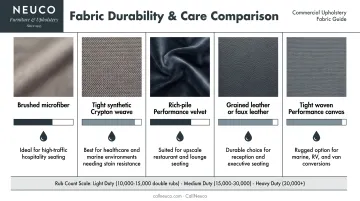
Here's how the leading fabric options compare.
Top Pet-Friendly Upholstery Fabrics for Furniture
Choosing a fabric comes down to four factors: durability (measured by rub count), stain and odor resistance, ease of cleaning, and how the weave interacts with claws and shedding fur.
Microfiber
Microfiber is a tightly woven synthetic fabric used widely in homes and commercial spaces because it's affordable and durable. The dense weave repels moisture, resists scratching, and keeps pet hair sitting on the surface instead of working into the fibers. That means a quick vacuum or wipe-down usually does the job.
| Factor | Details |
|---|---|
| Durability/Rub Count | High rub count, suitable for moderate-to-heavy traffic in most homes and businesses |
| Stain & Odor Resistance | Synthetic fibers resist moisture absorption and don't easily hold onto odors |
| Best Use Case | Family sofas, waiting rooms, and general seating with frequent daily contact |
Crypton Performance Fabric
Crypton is a performance textile built with a moisture barrier woven into the fabric itself. You'll find it in hospitals, animal shelters, and other commercial spaces that see heavy, constant use. Crypton reports that most of its fabrics withstand 50,000 double rubs or more, which puts it well above standard residential-grade materials.
Antimicrobial protection, stain resistance, and odor control are built into the fabric itself rather than applied as a separate treatment.
| Factor | Details |
|---|---|
| Durability/Rub Count | Engineered for extreme durability, suited to institutional and commercial-grade use |
| Stain & Odor Resistance | Built-in liquid barrier causes spills to bead up before they soak in |
| Best Use Case | Veterinary clinics, senior living furniture, and high-turnover commercial seating |
Performance Velvet
Performance velvet takes the classic look and rebuilds it for durability. A tighter, shorter pile replaces the long fibers of traditional velvet, which reduces snagging and improves how the fabric holds up over time.
You still get an upscale, tactile finish, but it resists watermarks and everyday wear far better than traditional velvet.
| Factor | Details |
|---|---|
| Durability/Rub Count | Short pile construction improves abrasion resistance over traditional velvet |
| Stain & Odor Resistance | Most performance velvets are treated for spot-cleaning and light stain resistance |
| Best Use Case | Upscale lobbies, boutique hospitality seating, or accent chairs in pet-friendly homes |
Leather & Faux Leather
Leather has been a go-to for pet owners and commercial buyers for decades, mostly because it's non-porous. Fur doesn't stick to it, odors don't soak in, and a damp cloth handles most messes. The catch: top-grain leather shows claw scratches, and cats especially can leave visible marks.
Neuco works with both leather and vinyl for commercial furniture projects, and its Finyl Fix line offers DIY vinyl and leather repair products for touching up scratches without a full reupholstery job.
| Factor | Details |
|---|---|
| Durability/Rub Count | Varies by grade, top-grain leather scratches more visibly than faux leather |
| Stain & Odor Resistance | Non-absorbent surface makes it naturally resistant to both stains and odor |
| Best Use Case | Reception areas, executive offices, or calmer pet households; faux leather suits active pets |
Performance Canvas / Outdoor-Grade Fabrics
These heavy-duty woven fabrics were built for patios and boats, then moved indoors for the same rugged performance. Dense weaves resist tearing, claw damage, and fading. Many versions are machine-washable or pair with removable slipcovers, which helps with pet hair and accidents.
| Factor | Details |
|---|---|
| Durability/Rub Count | Dense weave supports very high rub counts appropriate for heavy commercial use |
| Stain & Odor Resistance | Many versions carry added water- and stain-repellent finishes |
| Best Use Case | Playrooms, patios, and high-traffic commercial lobbies or breakrooms |
How to Choose the Best Pet-Friendly Fabric for Your Space
The most common mistake? Picking a fabric because it looks good on a showroom floor, without checking the rub count or what the cleaning routine actually requires.
Rub Count: Your Real Durability Benchmark
Rub count measures how many rubbing cycles a fabric can take before it shows wear. The Association for Contract Textiles sets separate benchmarks depending on the space:
- Private/residential spaces: 15,000 Wyzenbeek double rubs or 20,000 Martindale cycles
- High-traffic public spaces: 30,000 Wyzenbeek double rubs or 40,000 Martindale cycles
These two testing methods don't convert into each other, so compare fabrics using the same method whenever possible.
Color, Pattern, and Traffic Level
Mid-tone shades, textured weaves, and small patterns hide fur and minor stains far better than solid dark or solid light colors, which show everything from lint to water spots.
Commercial and hospitality spaces should aim for the higher end of the rub count scale and prioritize easy-clean finishes. More people and pets move through these spaces daily, so durability and cleanability matter more.
Fabrics to Avoid With Pets
Some fabrics just aren't built for claws and shedding, no matter how nice they look:
- Silk – snags easily and shows scratches almost immediately
- Chenille – looped texture traps fur and makes removal difficult
- Linen and tweed – loose weaves catch claws and fray with repeated snagging
Maintenance Tips to Extend the Life of Pet-Friendly Upholstery
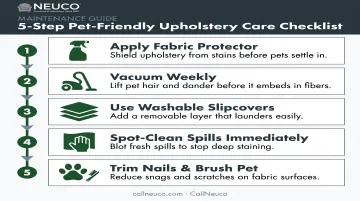
Even the best fabric needs upkeep. Consistent habits protect the weave and delay repairs:
- Apply a fabric protector to add a stain-resistant layer before heavy use.
- Vacuum weekly with a pet-hair attachment so fur does not pack into the weave.
- Use washable slipcovers or throws on high-contact areas like armrests and cushion edges.
- Spot-clean spills immediately before they set into the fibers.
- Trim nails and brush regularly so shedding and snags do less damage than the fabric choice alone can prevent.
For vinyl and leather pieces, Neuco's Finyl Fix products handle minor scratches and wear between full reupholstery jobs. When cushions or booth seating wear out, on-site or in-shop repair can often extend furniture life without a full replacement.
Conclusion
There's no single "best" pet-friendly fabric. The right choice depends on balancing durability, cleanability, and how much traffic your space actually sees, whether that's a veterinary waiting room or a senior living community lobby.
Before you buy, verify three things:
- Rub count for durability under heavy use
- Stain-resistance rating for real-world cleanups
- Long-term maintenance cost, not just upfront appearance
Neuco works with businesses, designers, and architects to specify and install pet-friendly commercial fabrics, managing the process from fabric selection through delivery and installation.
Frequently Asked Questions
What is the best pet-friendly furniture fabric for resisting pet hair?
Tightly woven fabrics like microfiber, Crypton, and leather resist fur buildup best since hair sits on the surface rather than working into the weave. Cleanup is usually a quick vacuum pass or wipe-down.
What rub count should I look for in pet-friendly upholstery?
For homes, aim for at least 15,000 Wyzenbeek double rubs or 20,000 Martindale cycles. Commercial spaces should target 30,000 double rubs or 40,000 Martindale cycles or higher.
Is leather a good choice for furniture in homes or businesses with pets?
Leather resists odor and wipes clean easily, but top-grain leather is prone to visible claw scratches. Faux leather offers similar cleanability with better scratch resistance for active pets.
Are performance fabrics like Crypton worth the extra cost?
Performance fabrics' durability and built-in stain and odor resistance usually offset the higher upfront price over the furniture's lifespan. That payoff is strongest in high-traffic commercial settings.
What colors or patterns best hide pet hair and stains on furniture?
Mid-tone shades, textured weaves, and small patterns disguise fur and minor stains far better than solid dark or solid light colors. Solids tend to show everything.
How often should pet-friendly upholstery in commercial spaces be professionally cleaned or reupholstered?
There's no universal schedule. Inspect pieces regularly and reupholster when wear affects appearance or hygiene. A professional repair service can often extend the life of the piece without full replacement.