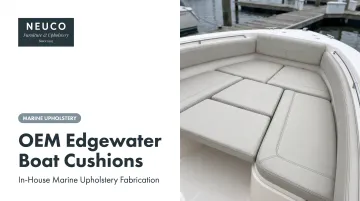
Search for "Edgewater boat cushions" and you'll hit a wall of generic marine seating that's close, but not quite right. That gap matters. Cushions that don't match factory dimensions or hardware mounts can shift, wear unevenly, or simply look wrong on a boat that's otherwise well-kept.
This guide breaks down what OEM actually means for boat seating, where to track down a real match, and whether reupholstering your existing seats beats buying new ones outright.
Key Takeaways
- OEM cushions match factory foam density, stitching, and mounting specs for a seamless fit
- Sourcing options range from authorized dealers to custom upholstery specialists for discontinued models
- Reupholstering typically costs less than full replacement when frames and foam are structurally sound
- Routine cleaning and UV protection extend cushion life
- Well-kept seating is a common buyer inspection point that supports stronger resale value
Edgewater Boats & Their Cushions: A Quick Overview
Edgewater has built a name in the center console fishing boat category, with a current lineup spanning the 230CC up through the 370CC. Boating Mag has described the brand's construction as "classy, upscale," and the 230CC specifically uses single-piece infusion construction with a fully finished bilge. Those details go beyond entry-level builds.
That construction quality extends to the seating. Factory cushions on boats like these typically rely on:
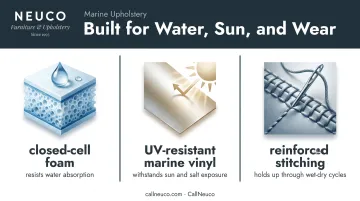
- Closed-cell foam: dense, non-permeable material that resists water absorption and helps preserve buoyancy
- UV-resistant marine vinyl: coated fabrics built for sun and salt exposure without cracking early
- Reinforced stitching: patterns meant to hold up through repeated wet-and-dry cycles
Those specs drive how long the seats last. Cushions that trap moisture or break down under UV need replacing years earlier than they should.
Why Cushion Quality Impacts Resale Value
Seating condition is one of the first things a buyer notices when stepping aboard. J.D. Power's boat valuation guidance notes that clean, dry interiors free of mold and water damage help owners secure the best resale price. Cracked vinyl or sagging foam sends a signal that maintenance has slipped elsewhere too.
There's no published percentage tying cushion condition alone to resale value. But boat buyers routinely flag torn or mismatched upholstery during inspections, and reupholstery work isn't cheap to fix after the fact. Keeping seating in factory-matched condition protects your asking price down the road.
What Does "OEM" Really Mean for Boat Cushions?
OEM stands for Original Equipment Manufacturer. West Marine defines it simply: an OEM part is made by, or to the exact specifications of, the company that originally built the equipment.
For a boat cushion, that means matching the same foam density, stitching pattern, dimensions, and mounting hardware Edgewater used when your boat rolled off the line.
A cushion that's simply labeled "replacement" or "fits Edgewater models" isn't automatically OEM. Generic alternatives often come with real tradeoffs:
- Inconsistent fit: slightly off dimensions that leave gaps or overhang
- Mismatched stitching: visible seam patterns that don't line up with neighboring cushions
- Premature wear: lower-grade foam or vinyl that breaks down faster than factory materials
Details to Verify Before You Buy
Before ordering anything, confirm these four things:
- Boat model and model year: Edgewater's lineup has shifted over time, and seat specs change between years
- Exact seat dimensions: measure length, width, and thickness, not just "close enough"
- Mounting hardware compatibility: bolt patterns and bracket types vary by production run
- Hull Identification Number (HIN): Edgewater's own contact page asks owners to include this for boat-specific inquiries
Older or discontinued Edgewater models make exact OEM sourcing tougher. Check Edgewater's official model lineup directly rather than assuming a part still exists for your year.
Where to Find OEM Edgewater Boat Cushions
Start With Authorized Dealers
Your best shot at an exact factory match is Edgewater's dealer network or the manufacturer directly. Edgewater’s U.S. dealer network is the channel the company uses for accessory and equipment questions. This is the route most likely to produce a true OEM part, especially for current model years.
Aftermarket and Marine Parts Marketplaces
When dealer stock comes up short, marine retailers like West Marine, iBoats, and Wholesale Marine list boat seat cushions and marine-grade vinyl seating. These are worth checking, but treat them as a secondary option:
- Quality and fit vary significantly by listing
- Edgewater-specific OEM status often isn't confirmed by the seller
- You'll need to independently verify dimensions and mounting compatibility
Custom Upholstery Specialists for Discontinued Models
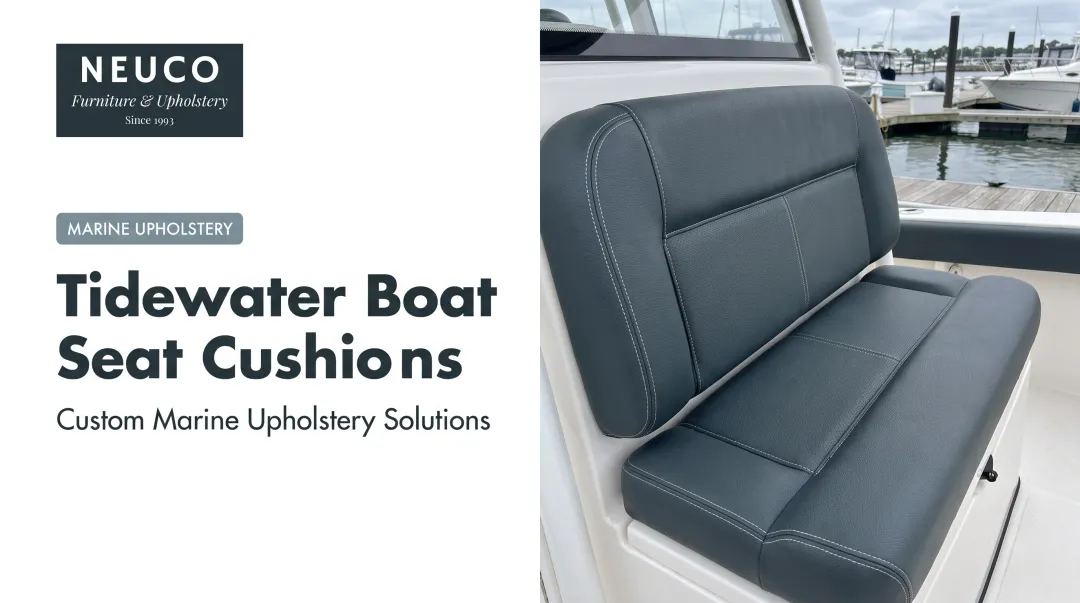
When exact OEM stock simply doesn't exist (common on older Edgewater hulls), a custom upholstery shop can replicate the original pattern, foam density, and color with fabric matching. Neuco is a practical option for that work.
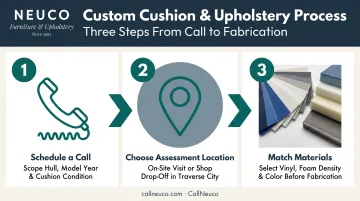
Neuco runs a full-service upholstery shop out of Traverse City, Michigan, and handles marine jobs from minor touch-ups to full seating rebuilds. Boat owners typically move through three steps:
- Schedule a call to scope the hull, model year, and cushion condition
- Choose on-site assessment at the boat or drop-off at the Traverse City shop
- Match marine-grade vinyl, foam density, and color before fabrication
Traverse Bay Marine has cited Neuco’s vinyl and canvas work adapted for marine use, which matters when OEM patterns are long gone.
Before committing to any non-dealer source, request fabric swatches and foam samples. A photo on a website rarely captures true color or texture, and a mismatched swatch is a lot cheaper to catch than a finished cushion that's the wrong shade.
Reupholster or Replace: Which Option Makes More Sense?
This is the question most Edgewater owners need answered. It comes down to what's underneath the vinyl.
When Reupholstering Makes Sense
If the seat frame and foam are structurally sound, reupholstering is typically the more budget-friendly path. You're paying for:
- Labor to strip and re-cover the existing frame
- New fabric or vinyl material
- Foam replacement only if needed—not full frame fabrication
Boating Mag's upholstery renovation guide notes that a frame with no underlying damage can typically be reused, while a frame with rotten or failing plywood requires full replacement rather than a simple recover.
When Replacement Is the Better Call
Skip reupholstering and go straight to new seating when you spot:
- Structural cracks in the seat base or frame
- Waterlogged foam that won't dry out and holds odor
- Rotten or delaminating plywood underneath the cushion
Trying to reupholster over a compromised frame just means paying for the same repair again in a year or two.
A Simple Decision Checklist
| Factor | Reupholster | Replace |
|---|---|---|
| Frame condition | Solid, no rot or cracks | Structural damage present |
| Foam condition | Firm, dry, holds shape | Waterlogged or crumbling |
| Budget | Lower—material and labor only | Higher—full cushion or seat unit |
| Timeline | Often faster turnaround | May need ordering lead time |
Reupholstering with a custom shop also frees you from stock OEM colors. With Neuco, owners can choose from a wider fabric and vinyl range than a standard factory replacement—so the repair can double as a style update when the frame is still sound.
Caring for Your Edgewater Boat Cushions
Whether you've gone OEM, aftermarket, or custom, proper care determines how long that investment lasts.
Cleaning marine vinyl:
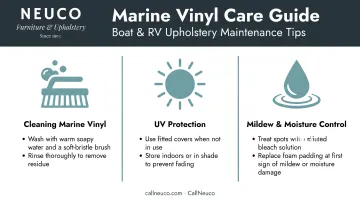
- Use warm, soapy water and a soft brush
- Rinse thoroughly with clean water and wipe dry
- Skip abrasive cleaners, steel wool, citrus products, and solvents—they strip protective coatings
UV protection:
- Use fitted covers when the boat sits idle
- Store cushions indoors during off-season months if possible
- When vinyl needs replacing, pick materials rated for UV and weathering
Mildew and moisture:
- Treat surface mildew promptly with diluted bleach and a soft brush, then rinse with clean water
- Mildew that keeps returning often means moisture has reached the foam, not just the vinyl
- If cleaning stops working within a season or two, replace the foam—not just the cover
Catching moisture problems early is the difference between a quick clean and a full reupholstery job.
Frequently Asked Questions
Are Edgewater boats considered high-end?
Edgewater sits in the upper-mid to premium tier of the center console fishing segment. The brand is known for infusion construction, finished bilges, and an upscale overall finish.
Is it cheaper to reupholster Edgewater boat cushions or buy new seats?
Reupholstering is usually cheaper when the frame and foam are still structurally sound, since you're only paying for materials and labor. Full replacement costs more but becomes necessary when there's frame damage or waterlogged foam.
Where can I buy Edgewater boat cushions?
Authorized Edgewater dealers offer the best chance at an exact factory match. Aftermarket marine retailers and custom upholstery specialists like Neuco fill the gap for discontinued models or when dealer stock isn't available.
Are Edgewater boats still in production?
Yes. Edgewater Power Boats is still an active manufacturer with a center console lineup. Confirm current models on Edgewater's official site before assuming parts exist for older hulls.
How long do OEM boat cushions typically last?
There's no fixed industry lifespan, since durability depends on sun exposure, usage frequency, and storage conditions. Cushions kept covered and cleaned regularly generally outlast those left exposed year-round.
Can I customize the fabric or color of my Edgewater boat cushions?
OEM replacements match factory specs exactly, with no color flexibility. Custom upholstery services like Neuco offer a broader range of fabric, vinyl, and color choices when you want a personalized refresh.