
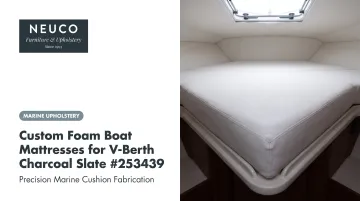
The real issue is geometry. A V-berth tapers to a point at the bow, so a standard rectangular mattress simply can't fit without modification. This guide walks through foam selection, a step-by-step DIY build, lower-cost alternatives, and when it makes more sense to call in a professional upholsterer instead of tackling it yourself.
Key Takeaways
- V-berths need custom-shaped foam because their tapering bow design won't accept an off-the-shelf mattress
- Marine-grade or antimicrobial foam handles below-deck moisture and mildew far better than standard residential foam
- DIY conversions usually cost less than a professionally built marine mattress
- Pair foam choice with moisture barriers and ventilation—DIY or pro-built
Understanding V-Berths and Marine Mattresses
What Does V-Berth Mean?
A V-berth is the sleeping berth built into the bow of a boat, shaped to follow the hull's natural taper to a point. Discover Boating's guide to boat anatomy describes it as a bed in the bow that's custom-made in varying shapes and sizes, since no two hulls narrow the same way.
That variation is exactly why a rectangular mattress never works without modification. Even boats from the same manufacturer can have slightly different V-berth angles depending on model year or refit history. Standard bedding simply wasn't designed with a pointed end in mind.
What Is a Marine Mattress?
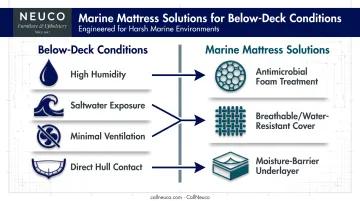
A marine mattress is bedding built for a boat's specific environment rather than a bedroom. Below deck, you're dealing with:
- High humidity from condensation and limited airflow
- Saltwater exposure near hatches and companionways
- Minimal ventilation compared to a house or apartment
- Direct hull contact, which can trap moisture underneath the cushion
A home mattress isn't built for any of these conditions. Marine mattresses compensate with antimicrobial foam treatments, breathable or water-resistant covers, and moisture-barrier underlayers between the foam and the berth base. Skip any one of those, and you're inviting mold.
Choosing the Best Foam Type for Your Boat Mattress
Foam selection makes or breaks a V-berth mattress. Get it wrong and you'll be replacing cushions again in two seasons.
Two foam families show up most often in V-berth builds:
Memory foam contours well and cuts cleanly with a straight blade, so it appeals for DIY. Below deck, though, it retains heat and holds moisture longer than other options—a poor fit in a poorly ventilated cabin.
Marine-grade antimicrobial foam is treated to resist mold and mildew in humid environments. It costs more upfront, but it is built for the conditions a V-berth actually faces and is the stronger default for most boats.
Open-Cell vs. Closed-Cell Foam
These two foam types manage moisture in different ways:
- Open-cell (reticulated) foam: Drains and dries quickly; strong breathability
- Closed-cell foam: Resists water absorption; better near hatches or splash-prone spots
- Underliner still required: Neither foam type replaces a moisture barrier between mattress and berth platform
Pair whichever foam you choose with that moisture-prevention layer. Skipping it shortens cushion life even when the foam itself is marine-rated.
Density, Firmness, and Thickness
Density and firmness aren't the same thing. High-density foam can still feel soft, and low-density foam can feel firm depending on how it's made.
For a tapering V-berth, medium-firm foam holds its shape better at the edges than soft, low-support foam, which tends to sag into the narrowing bow over time.
SAIL Magazine's guidance on sleeping aboard notes that overhead and space clearances often limit marine mattresses to a 4 to 6 inch range. Measure hatch clearance and headroom before you order thicker foam. A plusher mattress does no good if you can't close the hatch or sit up without hitting your head.
Step-by-Step Guide to Building a Custom Foam V-Berth Mattress
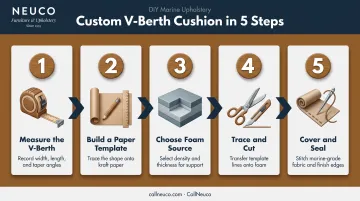
Building your own V-berth mattress isn't complicated, but it does reward patience during the measuring and templating stages. Rush that part and every step after it compounds the error.
- Measure the V-berth at multiple points. Record the widest front edge, overall length, depth, and the hull's angle of taper. Use your existing cushions as a rough reference, but don't assume they're accurate.
- Build a paper template first. Kraft paper or butcher paper lets you account for the tapering shape and any hull curvature before you touch a single piece of foam. This step alone prevents most costly mistakes.
- Choose your foam source. Decide between a pre-made mattress you'll cut down or foam sheets ordered to size.
- Trace and cut with the right tool. Transfer your template to the foam and cut slightly oversized—you can always trim more later. An electric foam saw or hot knife gives clean edges on angled or wedge cuts where the foam meets the hull.
- Cover and seal it properly. Wrap the finished foam in a marine-grade, water- and mildew-resistant fabric, ideally with a zippered cover for washing. Before final install, add a moisture-barrier underliner between the foam and the berth base.
Installation tip: V-berth mattresses rarely fit through a companionway in one piece without effort. Use a ratchet strap to compress and fold the foam temporarily, then release it once it's through the opening. It saves a lot of frustration and a few scraped knuckles.
Alternatives to Traditional V-Berth Bedding Setups
A full custom mattress isn't the only option. Depending on your budget and how you use the berth, one of these might suit you better.
- Split, two-piece design — One side lifts independently for storage access underneath, while both pieces still cover the full V-berth
- Foam topper — A memory foam layer over existing factory cushions improves comfort without a full replacement, at a fraction of the cost
- Insert or wedge cushions — A separate piece fills just the narrow bow section instead of one continuous custom mattress, and cuts foam waste
Whichever setup you land on, the cover takes the most wear. Keep a vinyl and leather repair kit like Neuco's Finyl Fix on hand so you can patch small tears or scuffs before they turn into a full re-cover job.
DIY vs. Professional Custom Upholstery: Which Route Is Right for You?
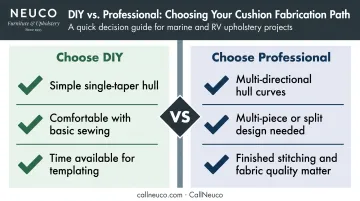
Building your own mattress saves money and gives you complete control over foam, fabric, and fit. It also demands serious time investment, and a measurement or cutting mistake on expensive marine foam is a costly do-over.
DIY makes sense when:
- Your V-berth has a fairly simple, single-taper shape
- You're comfortable with basic sewing or have access to a sewing machine
- You have time to template carefully before cutting
Professional help makes more sense when:
- The hull curves in more than one direction, complicating the template
- You want a multi-piece or split design with clean, matched seams
- Finished stitching quality and fabric selection matter as much as comfort
Neuco, for example, manages custom marine cushion projects from consultation through fabric and color selection to final installation. Work covers fabric, leather, vinyl, and marine-grade materials, on-site or in its Traverse City shop. That full-service handling is worth seeking once a project goes beyond a simple, single-angle cut.
On cost, no single dollar figure fits every boat, but the drivers stay consistent:
- DIY spends mainly on foam and cover materials; you supply the labor
- Professional builds add patterning, sewing time, sectional fabrication, and a finished moisture-control layer
DIY is generally the more budget-friendly route. A professional build costs more but removes the risk of wasting an expensive sheet of foam.
Frequently Asked Questions
What does V-berth mean?
A V-berth is the sleeping berth built into a boat's bow, shaped to follow the hull's tapering point. It's found on most sailboats and many powerboats, and the exact shape varies by vessel.
What is a marine mattress?
A marine mattress is foam bedding built with moisture- and mildew-resistant materials specifically for a boat cabin's humid, low-ventilation conditions. It typically includes a breathable or water-resistant cover and a moisture-barrier underlayer.
What type of foam is best for a boat mattress?
Medium-firm memory foam or marine-grade antimicrobial foam both work well, depending on your priorities. Medium-firm foam holds its shape better in a tapering V-berth than soft foam does.
What are some alternatives to V-berth bedding?
Lower-cost options include split two-piece mattresses, foam toppers over existing cushions, and wedge inserts for the narrow bow. These suit boaters who want flexibility or easier storage instead of a full custom rebuild.
How thick should a V-berth mattress be?
Most marine mattresses fall in the 4- to 6-inch range due to hatch and headroom clearances. Always measure your specific berth before ordering foam, since clearance varies by boat.
How can you prevent mold and mildew under a boat mattress?
Use a moisture barrier under the foam, allow airflow underneath with slats or a ventilated platform, and air out the berth regularly. Practical Sailor found damp mattress bottoms are the main culprit, so ventilation is the top prevention step.