
Hard surfaces — cinderblock walls, laminate desks, vinyl flooring — bounce sound around instead of soaking it up. The result is reverberation that muddies speech and turns normal classroom activity into a wall of noise. Younger students, whose hearing systems are still developing, struggle most.
This guide covers why classroom acoustics matter, the panel types that actually reduce noise, how to choose the right ones for your space, and the furniture-based strategies that round out a full acoustic plan.
Key Takeaways
- Noise above recommended levels hurts speech clarity, memory, and reading scores—especially for younger students
- Acoustic panels absorb sound instead of reflecting it; formats include wall, ceiling, and freestanding
- Choose panels by room size, NRC rating, fire-code compliance, and how the space is used
- Soft furnishings and upholstered seating add a second absorption layer alongside panels
Why Acoustic Treatment Matters in Classrooms
Most classrooms are built with sound in mind, just not in a good way. Tile floors, drywall, cinderblock, and rows of hard plastic chairs all reflect sound rather than absorbing it. Every scraped chair leg or dropped pencil bounces around the room before it fades.
The World Health Organization recommends classroom background noise stay below 35 dB(A) for good teaching and learning conditions. Occupied classrooms in practice often run 50-65 dB(A), with some early-grade classrooms spiking to 65-75 dB(A), according to a JASA study on speech recognition in classroom conditions.
That gap is the difference between a room where kids can follow instructions and one where they're guessing.
Kids Bear the Brunt of Poor Acoustics
Children don't hear like adults in noisy rooms. Their auditory systems are still refining how to separate speech from background noise well into adolescence.
That same JASA research found the youngest children in the study needed up to 4.5 dB more signal-to-noise ratio than adults to reach the same speech recognition accuracy in reverberant conditions. Translate that into a real classroom, and it means:
- Instructions get missed or misheard, especially from the back of the room
- Working memory takes a hit: kids spend cognitive effort filtering noise instead of processing content
- Reading and comprehension scores can drop in noisier rooms, even after accounting for language background and socioeconomic status
Teachers Pay a Price, Too
Constant background noise doesn't just affect students. Teachers instinctively raise their voice to be heard over it, and that habit compounds over a school year.
Research tracking classroom speech levels found voice output rising roughly in step with background noise. The louder the room, the louder and more strained the teacher gets. Over months, that leads to vocal fatigue.
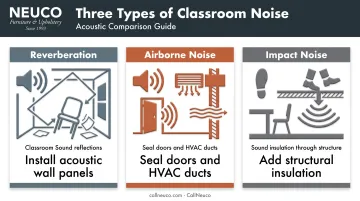
Understanding the Three Types of Classroom Noise
Not all classroom noise behaves the same way, and treating it effectively means knowing which kind you're dealing with.
- Reverberation: sound bouncing inside the room from chairs scraping, papers shuffling, and side conversations that hang in the air
- Airborne noise: sound entering from outside through hallway chatter, HVAC systems, or the classroom next door
- Impact noise: sound transmitted through the building structure, such as footsteps or furniture dragged on the floor above
Acoustic panels are most effective against reverberation. Airborne and impact noise usually need separate fixes: better door seals, HVAC adjustments, or structural insulation. That distinction matters before you expect panels alone to solve every noise complaint.
Best Types of Acoustic Panels for Classrooms
Once you know reverberation is the target, the next step is picking the right panel format for the room.
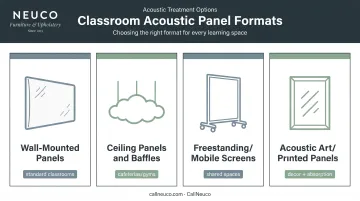
Wall-Mounted Panels
Fabric-wrapped or felt panels mounted on side and back walls are the most common classroom solution. They intercept lateral sound reflections — the ones bouncing between opposite walls — and noticeably improve speech clarity without eating up much floor space.
Ceiling Panels and Baffles
For rooms with limited wall space, or larger spaces like cafeterias and gyms, ceiling-mounted baffles and clouds treat large surface areas efficiently. Free-hanging systems like Ecophon's Solo line come in multiple shapes and sizes specifically for this kind of overhead treatment.
Freestanding or Mobile Screens
Portable acoustic screens work well in shared classrooms, open-plan learning spaces, or anywhere you need to temporarily divide a room for small-group instruction. One caveat: freestanding screens are tested as standalone objects, not as area-based wall materials. Don't assume a wall panel's NRC rating applies to a screen version of the same fabric.
Acoustic Art and Printed Panels
These blend sound absorption with classroom decor — think curriculum-themed graphics or displayed student work on an absorptive surface. They function as normal acoustic panels as long as the full printed assembly has been tested, not just the base material underneath.
Materials and Ratings to Know
Panel performance comes down to material:
| Material | Typical NRC range | Notes |
|---|---|---|
| PET felt (recycled polyester) | 0.75-0.85 | Durable, often low-VOC |
| Fiberglass/mineral fiber | 0.70-0.90 | Strong absorption, common in schools |
| Wood fiber (such as cementitious) | Up to 0.85 | Impact-resistant, works as wall or ceiling |
| Melamine foam | Varies by product | Confirm fire rating per product sheet |
NRC (Noise Reduction Coefficient) measures how much sound a material absorbs versus reflects, based on ASTM C423 testing. Higher numbers mean better absorption, but always check the test report, not just the marketing sheet.
Thickness matters too: panels 2 inches and thicker generally absorb lower frequencies better, which helps in larger or boomier rooms.
Before purchasing, confirm two things every school district should check without exception:
- Fire rating: ASTM E84 testing determines flame-spread class (A, B, or C). Requirements depend on your local adopted building code, so don't assume every panel needs to be Class A.
- Low-VOC materials: Look for documentation against CDPH low-emission standards, especially in early-childhood classrooms.
How to Choose Acoustic Panels for Different Classroom Spaces
The right panel setup depends on the room type and volume, not panel specs alone.
- Standard classrooms typically need wall panels sized for a reverberation time around 0.6 to 0.7 seconds, depending on room volume, per ANSI/ASA S12.60 school acoustics guidance.
- Cafeterias and gyms usually need ceiling-based treatment, since wall coverage alone can't handle the volume and hard-surface ratio of these larger rooms.
- Shared or flexible-use rooms often benefit from fixed wall panels plus mobile screens for adaptability.
Before buying anything, get a basic room assessment:
- Measure the room's dimensions and volume so you know the space you're treating.
- Note existing hard versus soft surfaces (tile, cinderblock, carpet, upholstered seating).
- If possible, measure or estimate current reverberation time (even a simple clap test helps).
- Use that data to calculate how much panel coverage and what NRC performance you actually need.
Skipping this step is the most common reason schools end up under-treating a room, or overspending on panels a smaller room didn't need.
Complementary Acoustic Solutions: Furniture and Soft Surfaces
Panels solve a lot of classroom noise problems, but they're not the whole answer. A 2023 preschool acoustics study found that curtains improved absorption most at 250-1000 Hz, while carpeting worked best at 2000-8000 Hz, and combining the two improved absorption across nearly the full tested range.
Layering soft materials with hard-surface treatment covers more frequency ground than either approach alone.
Quick supporting wins worth pairing with any panel installation:
- Rugs or carpet tiles in high-traffic zones
- Keeping doors and windows closed during instruction
- Neoprene or felt tips on chair and table legs to cut scraping noise
- Curtains or fabric window treatments where blackout isn't required
Upholstered, padded furniture absorbs sound far better than hard plastic or wooden seating. A classroom full of vinyl chairs and laminate desks reflects sound almost as efficiently as the tile floor beneath it. Swap in padded, fabric-covered seating and you add distributed absorption throughout the room, not just where the panels hang.
That is where a furniture refresh and a panel installation overlap. Neuco works with schools and designers on educational seating and custom cushions or upholstery in durable, sound-friendly fabrics and colors, so rooms gain absorption without replacing frames that are still structurally sound.
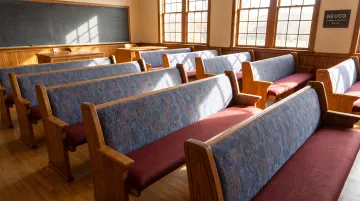
For a district stretching a facilities budget, new cushions and fabric on existing chairs paired with panels is often a more practical start than a full furniture replacement—and it can scale from one classroom to a school-wide rollout.
Frequently Asked Questions
Do acoustic panels for classrooms actually work?
Yes. Properly sized and placed panels measurably reduce reverberation and improve speech clarity, with performance backed by ASTM C423 NRC testing. The key is matching coverage to your room's actual volume and existing surfaces.
What NRC rating is recommended for classroom acoustic panels?
There's no single mandated NRC number — ANSI standards set room-level reverberation targets, not one product rating. Most classroom panels on the market range from 0.70 to 1.05 NRC, with larger or noisier rooms generally needing higher-performing materials.
How many acoustic panels does a classroom need?
It depends on room size, ceiling height, and current reverberation time. A basic room assessment measuring these factors will tell you exactly how much coverage you need. Guessing tends to under- or over-treat the space.
Where should acoustic panels be placed in a classroom for the best effect?
Back and side walls are the standard starting point for lateral reflections, while ceiling baffles work best in larger rooms with limited wall space. Avoid covering windows, doors, or whiteboards needed for daily instruction.
Are acoustic panels for classrooms safe and fire-compliant?
Quality classroom panels are tested under ASTM E84 for flame spread and typically documented for low-VOC emissions. Requirements vary by locally adopted building code, so confirm the specific classification your district requires.
How much do acoustic panels for classrooms typically cost?
Costs vary significantly based on material, panel size, mounting method, and total coverage needed. Request quotes that break out product cost, installation, and any custom finishes so you can compare projects accurately.