
The Ultimate Guide to Commercial Upholstery: Everything You Need to Know About Furniture Longevity
Is your furniture “wearing out” faster than it should: or is it simply wearing out the way it was designed to? In commercial spaces, upholstery takes a daily beating: sliding, wiping, spills, UV exposure, disinfectants, and the occasional accidental cut or burn. The good news: furniture longevity isn’t luck. It’s a controllable mix of smart material choices, correct construction, and a maintenance plan that matches your traffic.
This guide breaks down what actually impacts commercial upholstery life, how to evaluate fabrics, when to repair vs. reupholster vs. replace, and what to do differently in restaurants, medical spaces, marine interiors around the Great Lakes, and OEM production.
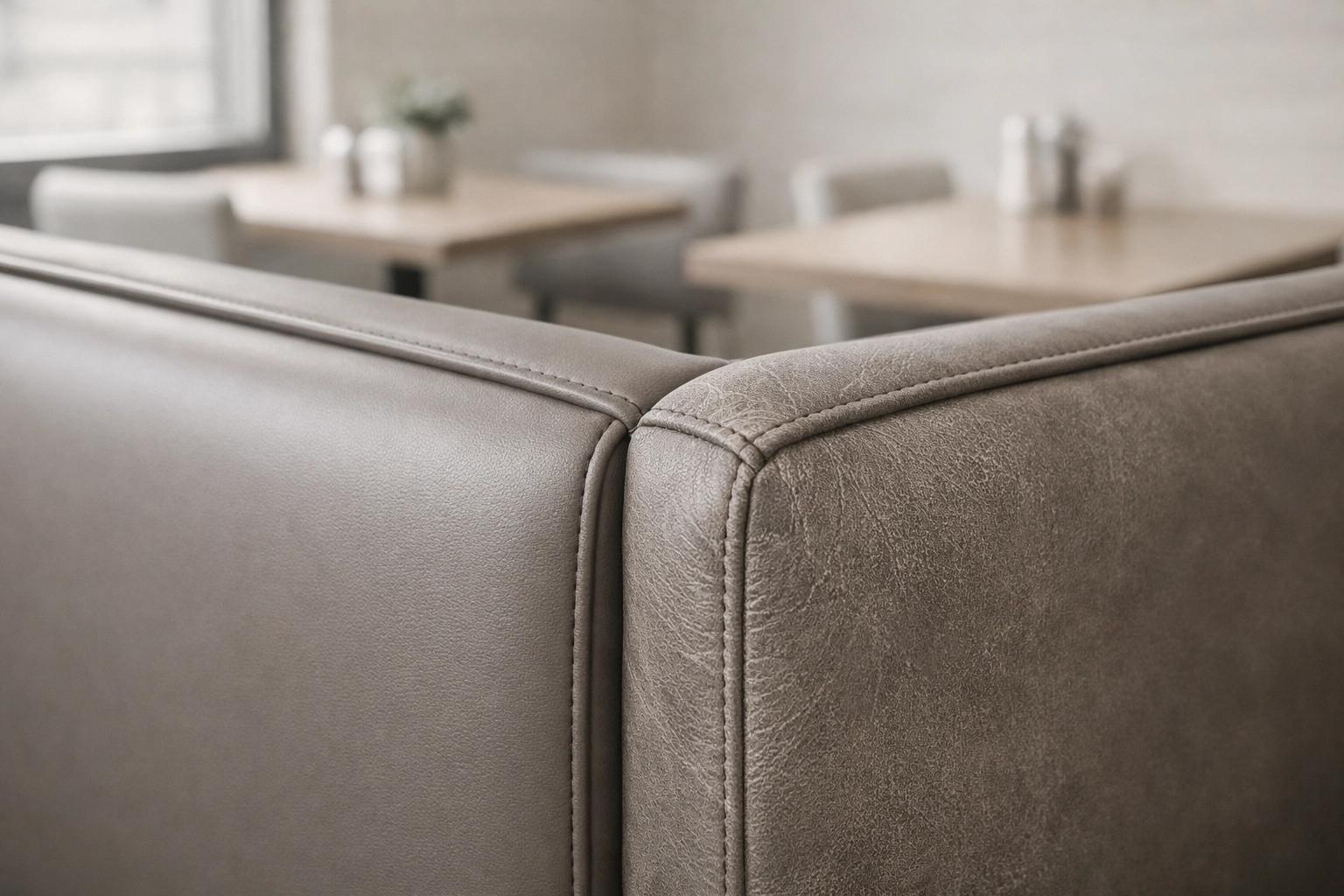
What “Furniture Longevity” Really Means in Commercial Spaces
In most commercial environments, a decade is a reasonable expectation for well-built furniture: but high-traffic pieces may need major work closer to five years. That range is normal. What matters is whether your upholstery is failing early (avoidable) or failing on schedule (expected).
Longevity is typically limited by one (or more) of these factors:
Surface wear (abrasion, pilling, fading, seam fraying)
Core comfort breakdown (foam compressing, cushions “bottoming out”)
Structural issues (loose joints, cracked frames, failed webbing/springs)
Finish and hygiene issues (stains that won’t lift, odor, microbial concerns)
Environmental stress (sunlight, moisture, temperature swings: especially in boats)
If you want furniture to last longer, the fastest win is usually not “clean more,” it’s pair the right material and construction to your real-world use.
Durability Testing 101: Rub Counts, Martindale, and What They Mean for You
If you’ve ever seen fabric specs like “50,000 double rubs,” you’ve seen durability testing in action. Two common metrics:
Wyzenbeek (double rubs) : common in North America
Martindale (cycles) : common internationally
General guidance you can use when selecting commercial upholstery:
Heavy commercial environments: aim for 35,000+ double rubs
Commercial (general): aim for 40,000+ Martindale cycles
Medium-use spaces: often land in the 12,000–15,000 double rub range (fine for some applications, not for others)
Pro-tip: Rub counts measure abrasion resistance, not everything. A fabric can test high and still fail in the field due to poor seam construction, low-quality backing, chemical sensitivity (cleaners), or UV exposure.
Materials That Last: Choosing Upholstery That Matches Your Space
There’s no single “best” upholstery. There’s only what’s best for your traffic, cleaning routine, and environment. Here’s how common commercial materials perform:
Fabric (woven textiles)
Best for: offices, lobbies, banquettes, some restaurant seating Watch-outs: staining, pilling, snagging, and deep-set odor if not cleaned properly
Choose fabrics with:
Tight, durable weaves
Strong backing
Documented cleaning codes and chemical compatibility
Want practical cleaning guidance? Neuco’s guide is a helpful baseline: https://callneuco.com/blog/how-to-clean-upholstery
Vinyl and performance-coated fabrics
Best for: healthcare, waiting rooms, high-turn dining, marine interiors Watch-outs: cracking over time (especially with UV and temperature swings), seam stress, and harsh chemicals that degrade the top coat
If your environment requires frequent wipe-downs, vinyl or a medical-grade performance surface can be the right call: as long as you pick a product rated for the disinfectants you use.
Leather
Best for: executive spaces, premium hospitality, high-end lounges Watch-outs: cost, scratching, the need for conditioning, and inconsistent performance depending on leather grade
Leather can last a very long time when maintained, but it’s not automatically “low maintenance.” It’s different maintenance.
Marine-specific materials (Great Lakes reality check)
Best for: pontoons, cruisers, fishing boats, and weekend “up north” interiors Watch-outs: UV, mildew, wet swimsuits, sunscreen, and temperature swings in spring/fall storage
In Michigan, the wear pattern is predictable: a short intense season, lots of “wet chaos,” and then months of storage. If your boat upholstery isn’t marine-rated, it can fail fast: even if it looks fine in the showroom.
Construction Details That Decide Whether Upholstery Fails Early
If two seats use the same fabric but one lasts twice as long, it’s usually construction: not magic.
Look for (or ask for) these build details:
Reinforced seams / double stitching in high-stress areas
Correct thread type (commercial-grade, UV-resistant when needed)
High-density foam that holds shape under constant compression
Proper cushion engineering (foam + wrap + insert design)
Stable frames with solid joinery and commercial reinforcement
Upholstery patterning that respects stretch direction (especially on vinyl)
Pro-tip: Seams are often the first failure point in restaurants and boats. If you see “smiling seams” (gaps forming as the material pulls), it’s usually a combination of tension, foam breakdown, and stitch strategy.
The Real Cost of “Cheap Now”: Why Longevity Is a Budget Strategy
Replacing furniture frequently costs more than you think because you’re paying in three places:
The purchase price
Downtime and disruption
Brand perception (a tired space reads as neglected, even if your service is great)
A smarter approach is to treat furniture like equipment: pick materials and build quality that match your operating reality, then maintain it on a schedule. If you’re evaluating whether professional work is worth it, this breakdown is a good companion read: https://callneuco.com/blog/how-do-upholstery-services-extend-the-life-of-commercial-furniture
Maintenance That Actually Extends Life (Not Just “Looks Cleaner”)
A good maintenance plan is preventative, consistent, and realistic for your staff. Here’s a simple structure that works across most environments:
Daily / Weekly (quick wins)
Brush or vacuum crumbs and grit (grit acts like sandpaper)
Wipe spills immediately using approved cleaners
Rotate loose cushions if your layout allows it
Monthly / Quarterly (longevity steps)
Inspect seams, corners, and high-contact zones
Tighten visible hardware on seating frames when applicable
Spot-treat stains before they set permanently
Schedule deep cleaning based on traffic (not calendar preference)
Pro-tip: Don’t “over-disinfect” upholstery
In medical or high-compliance spaces, you must disinfect: but using the wrong chemical (or the right one at the wrong concentration) can prematurely degrade coatings, threads, and foam. If you’re in healthcare, it’s worth aligning upholstery choices to hygiene requirements from the start.
Related reading for healthcare-specific upholstery decisions: https://callneuco.com/blog/benefits-of-choosing-custom-fabric-upholstery-for-healthcare-facilities
Restaurant Upholstery: Beating Spills, Sliding, and High Turnover
Restaurants are uniquely hard on furniture: guests slide in and out, edges rub constantly, and cleaning is frequent and fast.
What works best in restaurant settings:
High abrasion ratings (35,000+ double rubs is a good commercial baseline)
Tight upholstery with reinforced seams on seat-front edges
Moisture-resistant surfaces where spills are routine
Replaceable seat decks or modular cushions when possible
Common early-failure patterns:
Seat-front seam blowouts
Vinyl cracking at corners
Foam collapse (the “this booth feels tired” problem)
If you’re updating a dining room, don’t just re-cover. Consider whether you need:
Higher-density foam upgrades
Seat rebuilding
Better corner reinforcement
A different surface material for wipe-down reality
Medical Upholstery: Hygiene, Disinfectants, and Patient Experience
Medical environments need upholstery that supports both infection control and comfort: without looking institutional.
Key priorities:
Cleanability and chemical compatibility with your disinfectant list
Moisture barriers where needed (to protect foam and internal structure)
Seam strategy to reduce places contaminants can settle
Repairability so small damage doesn’t become a hygiene issue
Pro-tip: Small cuts and pinholes are not just cosmetic in healthcare. They can compromise the barrier surface and create cleaning limitations. Address damage early instead of waiting for it to “get bad enough.”
Marine Upholstery (Great Lakes Edition): Sun, Storage, and Family Mess
If you boat in Michigan, you know the vibe: a cooler, damp towels, sticky Capri Suns in the back seat, maybe a couple adults with a Shorts Brewing Co. in hand, and someone suggesting you swing by Long Lake Grocery for pizzas: on the pontoon, of course. That’s real life, and your boat upholstery has to survive it.
What helps boat upholstery last longer on the Great Lakes:
UV-resistant, marine-rated vinyl or marine fabrics
Mildew-resistant construction (thread, foam, and ventilation matter)
Good drainage and airflow (avoid trapping moisture under cushions)
Proper winter storage (dry, clean, covered, and ventilated)
Simple boat upholstery care rules:
Wipe sunscreen off ASAP (it can break down surfaces over time)
Don’t store cushions while damp
Use covers that breathe: plastic-like covers can trap moisture and encourage mildew
If you travel to Florida (saltwater), that’s a different set of risks (salt, corrosion, extra UV). But for most Michigan owners, the bigger enemy is moisture + storage habits, not salt.
OEM Upholstery: Designing for Longevity at Scale
OEM work is where consistency and repeatability matter as much as raw durability. If you’re producing seating, cushions, or upholstered components at scale, longevity is engineered through:
Material specs that match real use conditions
Repeatable patterning and stitch strategy
Reliable sourcing and lead times
Testing, documentation, and revision control
This is also where a total-solution approach helps. Sometimes reupholstery is the best value; sometimes buying new is smarter due to timelines, standardization needs, or structural limitations.
If you’re exploring OEM support, Neuco’s OEM FAQ archive is a useful starting point: https://callneuco.com/blog/faq_type/oem
PFAS-Free Fabrics and Performance Materials: What to Ask Before You Commit
PFAS-free performance fabrics are a growing priority for many organizations. The key is to verify that you’re not trading away the performance you need (stain resistance, cleanability, durability) for a label that isn’t matched to your environment.
Questions to ask your upholstery partner:
Is this fabric PFAS-free and can the supplier document it?
What’s the abrasion rating and intended use category?
Which cleaners and disinfectants are approved?
How does it handle UV and moisture (especially marine or sunny storefronts)?
What’s the warranty: and what voids it?
A good spec process keeps you out of the “it looked great for six months” trap.
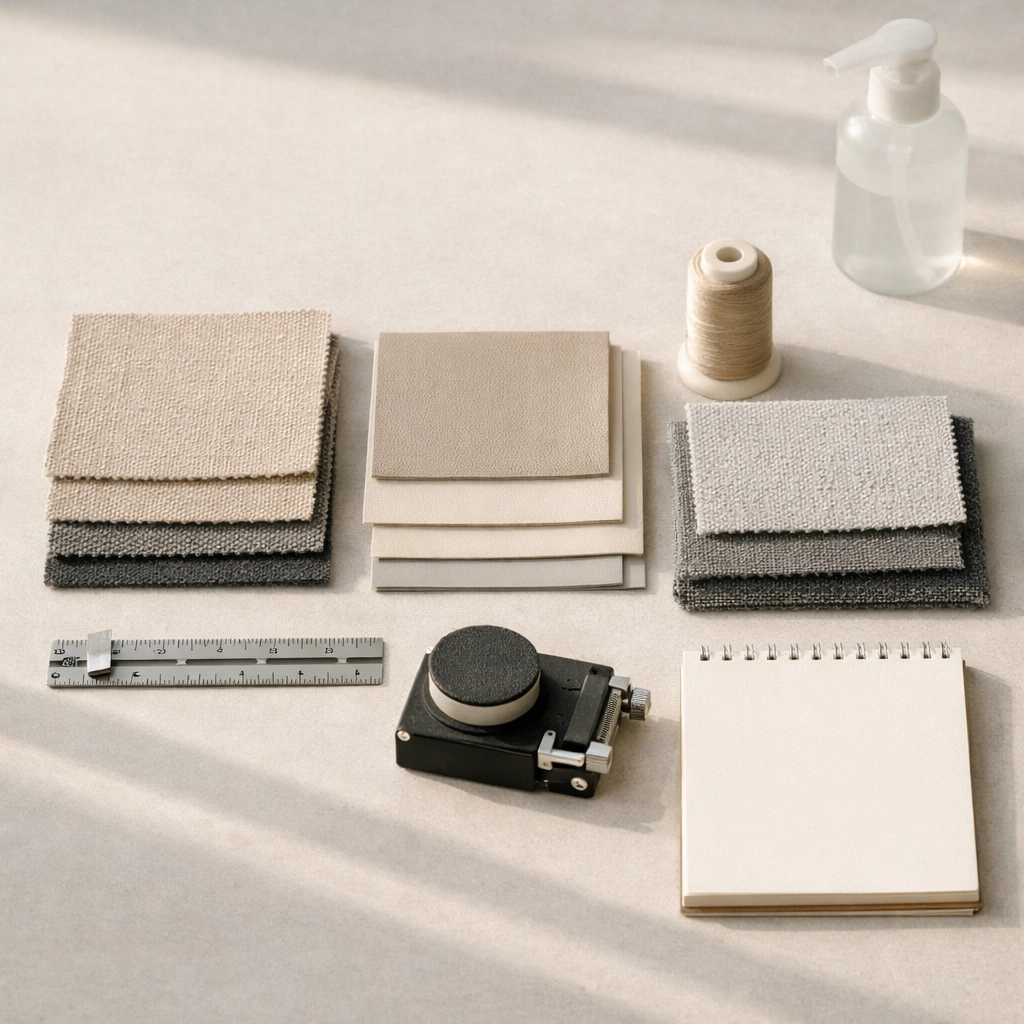
Repair vs. Reupholster vs. Replace: A Practical Decision Checklist
Here’s a quick way to decide what makes financial and operational sense.
Repair makes sense when:
Damage is isolated (small tears, seam separation, localized burns)
The frame and foam are still solid
You need fast turnaround with minimal disruption
Reupholster makes sense when:
The piece is structurally sound but looks worn
Foam needs upgrading or replacing
You want a refresh without buying all new furniture
You need a specific performance spec (medical, marine, heavy dining)
Replace makes sense when:
Frames are failing or unsafe
Rebuild cost approaches replacement cost
You need a new design standard across locations
Lead times or quantity needs make new production more efficient
This is where Neuco + Sourcebay can be a straightforward, full-service path:
Use Neuco when reupholstery, custom furniture, cushions, or pillows are the best value.
Use Sourcebay (sourcebay.com) when buying new is the better option for standardization, speed, or total cost.
You’re not stuck forcing one solution. You can choose the option that protects longevity and budget.
Common Upholstery Problems (and What They Usually Mean)
You can often diagnose what’s happening just by the failure pattern:
Cracking at corners: stress + aging coating + UV/temperature swings
Seams splitting: tension, weak thread, poor seam design, or foam collapse
Fabric pilling: friction + fiber type + improper cleaning tools
Fading: UV exposure or incompatible cleaning chemicals
Black spots / mildew: moisture trapped + lack of airflow (common in boats)
If you suspect mold or black spotting, handle it promptly and correctly: here’s a Neuco reference that can help you start: https://callneuco.com/blog/how-to-clean-black-spot-from-head-on-upholstery-fabric
Final Thoughts: Longevity Is a System, Not a Material
Commercial upholstery lasts longest when you treat it like a system: right material + right construction + right maintenance + early repairs. When those pieces align, you get more years, fewer disruptions, and a space that stays on-brand instead of “quietly run down.”
If you want help choosing materials, rebuilding seating, refreshing marine interiors, or supporting OEM production, Neuco can guide the process end-to-end: and when replacement is the smarter move, we’ll point you to Sourcebay (sourcebay.com) so you can buy new with confidence.
To learn more about Neuco’s commercial upholstery services, visit https://callneuco.com.


Comments